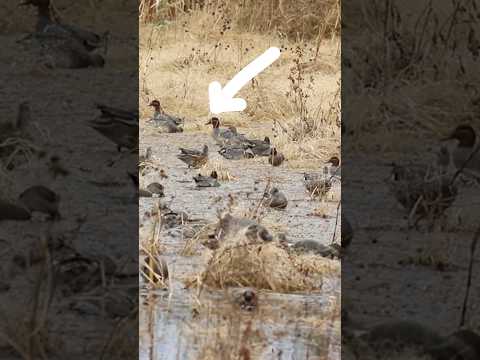
Nobody Believes This Decoy Strategy Works #hunting

Published on December 11, 2025
Duration: 2:00

This guide details an expert duck decoy strategy from a Mossberg representative, focusing on increasing visibility and effectiveness. It highlights the importance of using a large spread (192 decoys) and strategically incorporating species like Shoveler and Pintail drakes due to their contrasting colors, which are more visible to ducks than standard Mallards. The technique aims to build confidence in approaching birds by mimicking natural diversity seen in various flyways.

Quick Summary

An effective duck decoy strategy involves using a large spread, ideally around 192 decoys, and incorporating species with high-contrast coloration like Shoveler and Pintail drakes. These birds stand out more than Mallards, building confidence in approaching waterfowl by mimicking the visual diversity seen in natural flyways.

Chapters

  1. 00:00Introduction to Decoy Strategy
  2. 00:09The 192-Decoy Spread Analysis
  3. 00:33Visibility and Color Importance
  4. 01:05Strategic Use of Shoveler Drakes
  5. 01:24Breaking the Mallard Habit

Frequently Asked Questions

What is the key to an effective duck decoy strategy?

The key is to use a large spread of decoys, strategically incorporating species like Shoveler and Pintail drakes. Their high-contrast colors make them more visible to ducks than standard Mallards, building confidence for approaching birds.

Why are Shoveler and Pintail decoys recommended over Mallards?

Shoveler and Pintail drakes possess brighter, more contrasting colors that stand out in various lighting conditions and distances. Mallards, while common, tend to blend in more, potentially making them less effective for attracting wary waterfowl.

How many decoys are recommended for an effective spread?

The video suggests a large spread of 192 decoys (16 dozen) as an example of an effective tactic. The principle is that a larger, more diverse spread creates a stronger visual signal of safety and opportunity for ducks.

What is the benefit of mixing decoy species?

Mixing decoy species helps mimic the natural diversity that ducks observe across different flyways. This variety can make your spread appear more natural and less suspicious, encouraging ducks to commit and land.

More from MOSSBERG

View all →