500 Magnum VS 44 Magnum: Which One REALLY Hurts More?

Published on January 27, 2026
Duration: 1:26

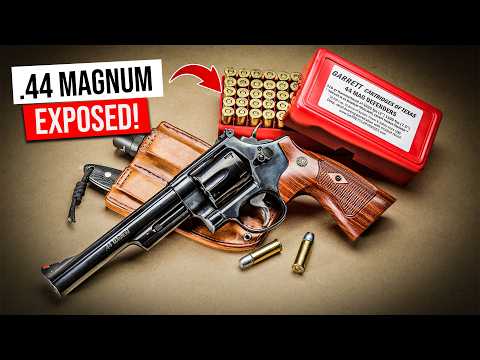
This video compares the felt recoil of the .44 Magnum and the .500 S&W Magnum. An experienced shooter demonstrates that despite the .500 S&W Magnum's larger caliber, the Ruger Blackhawk in .44 Magnum can feel like it 'hurts' more due to the S&W 500's heavier frame and integrated muzzle brake, which effectively reduce felt recoil. The demonstration includes both two-handed and one-handed firing techniques.

Quick Summary

An experienced shooter demonstrates that the .44 Magnum can feel like it hurts more than the .500 S&W Magnum. This is attributed to the .500's heavier frame and integrated muzzle brake, which effectively reduce felt recoil, making it more manageable despite its larger caliber.

Chapters

  1. 00:00Introduction: .44 Magnum vs. .500 Magnum
  2. 00:24Shooting the Ruger Blackhawk .44 Magnum
  3. 00:40Shooting the Smith & Wesson 500 Magnum
  4. 01:00Conclusion and Recoil Comparison

Frequently Asked Questions

Does the .44 Magnum or .500 S&W Magnum hurt more to shoot?

Surprisingly, the .44 Magnum can feel like it hurts more. This is often due to the .500 S&W Magnum's heavier firearm weight and effective integrated muzzle brake, which significantly reduce felt recoil compared to lighter .44 Magnum revolvers without such features.

What factors influence felt recoil in handguns?

Felt recoil is influenced by several factors, including the firearm's weight (heavier guns absorb more recoil), the ammunition's power (bullet weight and velocity), and the presence of recoil mitigation devices like muzzle brakes or compensators.

Is the .500 S&W Magnum difficult to shoot one-handed?

While the .500 S&W Magnum is a very powerful handgun, its design often includes features like significant weight and muzzle brakes that can make one-handed shooting more manageable than one might expect, though it still requires proper technique and strength.

What is a muzzle brake and how does it affect recoil?

A muzzle brake is a port or slots at the end of a barrel designed to redirect propellant gases. This redirection helps to counteract the recoil impulse, making the firearm feel softer shooting and reducing muzzle rise.

Related News

All News →

More Reviews Videos You Might Like

More from Gun Deity

View all →