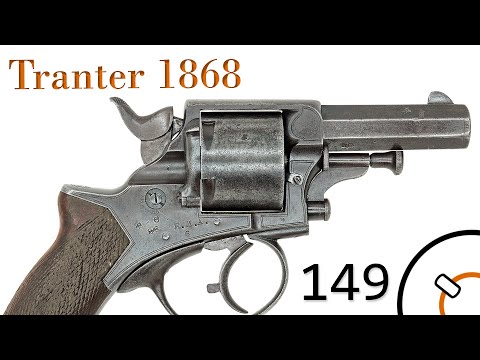
.577 Caliber Bland-Pryse Stopping Revolver

Published on April 4, 2019
Duration: 7:35

This review delves into the rare .577 Bland-Pryse 'stopping revolver,' a formidable Victorian-era firearm designed for dangerous game defense in colonial India. The video highlights its massive .577 caliber, break-action mechanism, and historical context, comparing it to modern cartridges and other historical revolvers. The expert analysis emphasizes the gun's impracticality for general use but its significant stopping power for its intended purpose.

Quick Summary

The .577 Bland-Pryse 'stopping revolver' was a rare Victorian-era firearm designed for dangerous game defense in colonial India. It features a massive .577 caliber, a 5-round capacity, and a dual-lever break-action lock. Its 400-grain bullet at 725 fps offered significant stopping power, exceeding some modern large-caliber rounds.

Chapters

  1. 00:00Introduction to the .577 Bland-Pryse
  2. 01:00Size and Capacity Comparison
  3. 02:11Mechanical Design and Origins
  4. 03:12Ballistics and Power
  5. 05:54Cylinder Removal and Action

Frequently Asked Questions

What was the intended purpose of the .577 Bland-Pryse revolver?

The .577 Bland-Pryse 'stopping revolver' was designed for self-defense against dangerous game, such as tigers, particularly in colonial India during the Victorian era. Its massive caliber provided significant stopping power for such threats.

How does the .577 Bland-Pryse compare in size and power to other revolvers?

The .577 Bland-Pryse is notably larger than standard service revolvers like the .455 Webley Mk VI. Its .577 caliber fires a heavy 400-grain bullet at around 725 fps, delivering more power than modern cartridges like the .50 GI due to projectile weight.

What is significant about the 'Pryse' name and the locking mechanism?

The 'Pryse' designation refers to the dual-lever break-action locking system patented by Pryse. This mechanism was crucial for the structural integrity of break-action revolvers handling powerful cartridges, though Webley never produced a .577 version using this patent.

Where was the .577 Bland-Pryse likely manufactured and sold?

Evidence like Belgian 'ELG' proof marks suggests this revolver was manufactured in Liege, Belgium, and likely retailed in London by firms such as T.W. Watson, as indicated by engravings on the firearm.

More Reviews Videos You Might Like

More from Forgotten Weapons

View all →