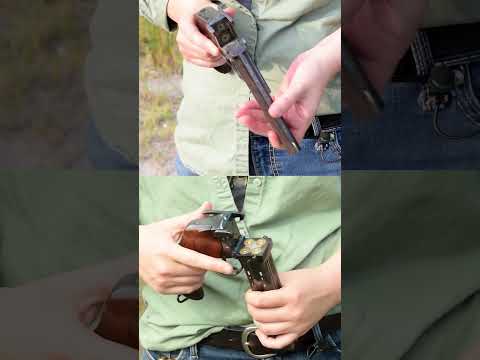
History of WWI Primer 167: British Contract Remington 14 1/2 Documentary

Published on November 15, 2022
Duration: 72:41

This video provides an in-depth review of the Remington Model 14 and 14 1/2 slide-action rifles, detailing their history, design by John D. Pederson, and their surprising auxiliary role in World War I. It covers technical specifications, operational mechanics, historical context, and a detailed look at their features, including a step-by-step disassembly guide.

Quick Summary

The Remington Model 14 and 14 1/2 rifles, designed by John D. Pederson, were slide-action firearms chambered in .44-40 WCF and .38-40 WCF. They saw auxiliary service in WWI with the British Royal Navy, used on aircraft and ships. Key features include an improved extraction system, a unique dial-up rear sight, and an ammunition indicator disc.

Chapters

  1. 00:21Introduction: Remington Model 14 1/2
  2. 00:37Specifications and Initial Impressions
  3. 01:04Sponsor Message & Ballistol
  4. 03:07History of Remington Arms
  5. 04:16The Slide Action Rifle Market
  6. 05:15John D. Pederson: The Inventor
  7. 07:09Pederson's Design Work: Model 10 & 12
  8. 08:04Model 14 Design Goals
  9. 08:24Internal Workings: Tilting Bolt & Extraction
  10. 09:16Safety Features: Out of Battery Safety
  11. 09:31Chain Detonation Concerns
  12. 10:28Twisted Magazine & Model 14 Release
  13. 11:15Chamberings: .44-40 and .38-40
  14. 13:03Close Look at the Model 14 1/2
  15. 13:59Loading the Rifle
  16. 14:50Breech Block Operation
  17. 16:29Safety Mechanism: Cross Bolt
  18. 16:51Unique Rear Sight Design
  19. 17:54Receiver Hump and Anti-Glare Cut
  20. 18:21Ammunition Indicator Feature
  21. 19:55Takedown Screw and Disassembly
  22. 21:19Bolt Removal and Reinstallation
  23. 22:42Pederson Design: Internal Complexity
  24. 23:02Magazine Loading and Feeding Mechanism
  25. 23:45Breach Locking Lever Explained
  26. 24:51Cartridge Feed and Stop Mechanism
  27. 26:12Breech Block Locking and Unlocking
  28. 26:50Lifter and Cartridge Alignment
  29. 27:43Trigger and Sear Mechanism
  30. 28:26Improved Extraction System
  31. 28:43Extractor and Ejector Function
  32. 29:35Rotating Sear Lock Safety
  33. 30:19Manual Trigger Guard Safety
  34. 31:23WWI Service: Winchester 1892
  35. 33:21Model 14/14 1/2 Configurations and Pricing
  36. 34:25WWI Service: Remington Model 14 1/2
  37. 37:46Actual Service and Post-War Disposal
  38. 38:25Remington's WWI Production Challenges
  39. 40:40Post-War Industry Correction
  40. 41:15Safety Improvement: Drop-Safe Feature
  41. 43:07New Thumb Safety and its Issues
  42. 43:33Redesigned Safety (Post-1920)
  43. 44:06Magazine Spring and Minor Changes
  44. 44:31Production End and Total Numbers
  45. 44:58Model 25 and Remington UMC Acquisition
  46. 45:42Model 141 'Game Master'
  47. 46:04Model 760 and Lineage
  48. 46:23John D. Pederson's Later Work
  49. 47:50Shooting Impressions: Handling and Feel
  50. 49:21Aesthetic and Ergonomic Observations
  51. 53:00Live Firing and Operation
  52. 56:18Sights and Aiming
  53. 57:26Trigger Pull and Ejection
  54. 59:13Practicality as a Civilian Firearm
  55. 60:40WWI Military Application Analysis
  56. 61:29Pump vs. Lever Action in Combat
  57. 62:29Suitability for Trench Warfare
  58. 65:38Overall Utility and Conclusion
  59. 67:25Final Thoughts and Future Content

Frequently Asked Questions

What was the primary role of the Remington Model 14 1/2 in World War I?

The Remington Model 14 1/2 served in an auxiliary role during WWI, primarily with the British Royal Navy. It was used on miscellaneous craft, as backup weapons on aircraft, and for ship inspection duties, rather than frontline combat.

Who designed the Remington Model 14 and 14 1/2 rifles?

These rifles were designed by John D. Pederson, an inventor who also developed the Remington Model 10 shotgun and Model 12 rifle. His designs often featured innovative mechanisms for their time.

What were the common chamberings for the Remington Model 14 and 14 1/2?

The Remington Model 14 and 14 1/2 were typically chambered in popular pistol cartridges such as .44-40 WCF (also known as .44 Remington) and .38-40 WCF. These allowed for higher magazine capacity and manageable recoil.

What safety features were incorporated into the Remington Model 14/14 1/2?

Early models had a crossbolt trigger safety and an out-of-battery safety. Later versions, after 1919, received a redesigned safety mechanism to address drop-safety concerns, evolving from a 'thumbnail safety' to a more conventional trigger guard safety.

How does the ammunition indicator on the Remington Model 14/14 1/2 work?

The brass disc ammunition indicator on the left side of the receiver displays the correct cartridge headstamp for the rifle, such as 'Remington UMC .44 Remington.' It also served as a jig position during the rifle's manufacturing process.

More Reviews Videos You Might Like

More from C&Rsenal

View all →