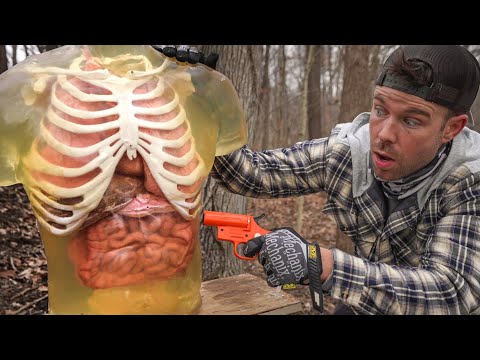
If The Mossberg Shockwave Was FASTER & More LETHAL! (The AFTERSHOCK)

Published on March 23, 2026
Duration: 16:37

This video reviews the Mossberg Aftershock, a semi-automatic 12-gauge firearm classified as 'other' due to its bird's head grip and barrel length. The reviewer compares its performance, particularly recoil, to the pump-action Mossberg Shockwave, highlighting the Aftershock's softer shooting characteristics. It also tests various ammunition types to assess cycling reliability and felt recoil, concluding it's a fun and effective firearm despite limitations with certain low-power loads.


Quick Summary

The Mossberg Aftershock is a semi-automatic 12-gauge firearm classified as 'other' due to its bird's head grip and 14.75-inch barrel. It offers significantly reduced recoil compared to the pump-action Mossberg Shockwave, making it softer shooting and allowing for faster follow-up shots. However, its semi-automatic nature limits its ability to cycle all ammunition types, particularly low-power loads.

Chapters

  1. 00:00Introduction to the Mossberg Aftershock
  2. 00:33Mossberg Aftershock 990 Overview
  3. 01:00Legal Classification: 'Other' vs. Shotgun
  4. 01:22Aftershock Variants: Base, Crimson Trace, SPX
  5. 02:30SPX vs. Crimson Trace Features
  6. 02:51Capacity and First Shots
  7. 03:08Initial Firing Impressions
  8. 03:25Target Practice with Crimson Trace
  9. 04:03Speed Shooting and Ejection Pattern
  10. 04:37Right-Handed Shooting Comfort
  11. 05:02Transitioning from Pump-Action
  12. 05:19Recoil Difference: Aftershock vs. Shockwave
  13. 05:57Point of Impact Check
  14. 06:23Aftershock vs. Metal Trash Can
  15. 06:54Target Annihilation Challenge
  16. 07:41Sporting Clay on Texas Star
  17. 08:05Range Destruction Summary
  18. 08:14Recoil and Ammo Selection Concerns
  19. 08:51Mini Shell Cycling Test
  20. 09:38Baseline: Target Loads Recoil
  21. 10:07Number Six Birdshot Recoil
  22. 10:32Winchester Double Up Buckshot Test
  23. 11:19Federal Flight Control Buckshot Test
  24. 11:46Sterling Big Game Slug Test
  25. 12:363-inch Royal #4 Buckshot Test
  26. 13:38Hip Firing Powerful Loads
  27. 14:05Aftershock vs. Shockwave: Recoil & Flexibility
  28. 15:00Overall Preference: Aftershock
  29. 15:21Conclusion and Final Thoughts
  30. 16:05Future Modifications and Content

Frequently Asked Questions

What makes the Mossberg Aftershock legally distinct from a shotgun?

The Mossberg Aftershock is classified as 'other' rather than a shotgun due to its specific configuration, including a bird's head grip and a barrel length of 14.75 inches, which bypasses standard shotgun legal definitions.

How does the recoil of the Mossberg Aftershock compare to the Mossberg Shockwave?

The Mossberg Aftershock features significantly less felt recoil than the pump-action Mossberg Shockwave. This is attributed to its semi-automatic action, which absorbs a portion of the recoil energy during cycling.

Can the Mossberg Aftershock fire all types of 12-gauge ammunition?

No, the Mossberg Aftershock, being semi-automatic, cannot reliably cycle all ammunition types. It struggled with low-power loads like mini shells and may not cycle less-lethal options such as rubber bullets or bean bags due to insufficient energy to operate the action.

What are the advantages of the Mossberg Aftershock over the Mossberg Shockwave?

The primary advantages of the Aftershock are its semi-automatic operation, resulting in reduced recoil and faster follow-up shots, and its overall fun factor for rapid target engagement without manual pumping between shots.

Related News

All News →

More Reviews Videos You Might Like

More from 1ShotTV

View all →