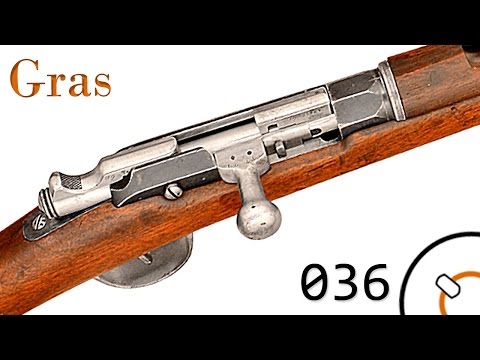
Minute of Mae: French Gras 1874/80/14

Published on August 12, 2021
Duration: 1:01

This video provides a technical overview of the French Gras rifle, specifically focusing on the 1874, 1880, and 1914 variants. It details the transition from black powder to smokeless cartridges, the evolution of the receiver design to accommodate the bolt handle, and changes in sighting systems. The presenter notes the rifle's weight, overall length, and the addition of a handguard for heat management, concluding that while not designed for frontline combat, it did see service in World War I.

Quick Summary

The French Gras rifle evolved significantly from its 1874 single-shot design to later models capable of firing smokeless 8mm Lebel cartridges. These 1880 and 1914 variants featured improved receivers, new barrels, and updated Lebel Berthier sights, though they were not primarily intended for frontline combat but did see WWI service.

Chapters

  1. 00:08Rifle Specifications
  2. 00:14Evolution from 1874 Model
  3. 00:24Smokeless 8mm Lebel Upgrade
  4. 00:31Action and Extraction
  5. 00:36Trigger and Recoil
  6. 00:39Lebel Berthier Sights
  7. 00:47Handguard and Heat
  8. 00:50Service and Conclusion

Frequently Asked Questions

What were the key design changes in the French Gras rifle from the 1874 to the 1914 models?

The French Gras rifle evolved from the 1874 model, which was a single-shot firearm. Later models, like the 1880 and 1914, were upgraded to fire smokeless 8mm Lebel cartridges, requiring new barrels. The receiver design was also refined to better handle the bolt action, and a handguard was added for heat management.

How did the ammunition change for the French Gras rifle over time?

Initially, the French Gras rifle was designed for cartridges that proved too taxing for its receiver. By the 1880 and 1914 models, it was adapted to fire the smokeless 8mm Lebel cartridge. This transition to smokeless powder was a significant technological advancement for the rifle's era.

What are the notable differences in the sights of the French Gras rifle?

The later Lebel Berthier sights on the French Gras rifle are described as less quick to read compared to older versions. While older sights had deeper notches, the newer ones are shorter and flatter, featuring a fine front sight post for aiming.

Did the French Gras rifle see combat service despite not being designed for frontline duty?

Yes, despite not being initially designed with frontline service in mind, the French Gras rifle, particularly the later models, did see some service during World War I and continued to be used beyond that conflict.

More Reviews Videos You Might Like

More from C&Rsenal

View all →