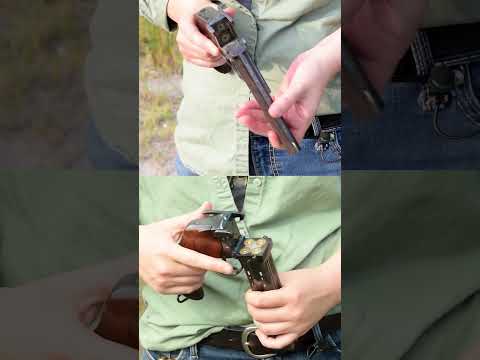
Minute of Mae: Russian Nagant 1895 "Single Action Only"

Published on August 29, 2024
Duration: 1:01

This video provides a technical overview of the Belgian-made Russian Nagant 1895 revolver, highlighting its single-action-only operation and gas-sealed design. It details the loading process for its seven rounds of 7.62 Russian ammunition and discusses its external features, including sights and grip size. The presenter notes the rarity of original single-action-only models due to widespread conversions.

Quick Summary

The Belgian-made Russian Nagant 1895 is a gas-sealed revolver, often found in single-action-only configuration, weighing 1.74 lbs with a 9.2-inch length. It uses 7.62 Russian ammunition and features cylinder detents. Original SAO models are rare due to widespread conversions to double-action.

Chapters

  1. 00:07Nagant 1895 SAO Overview
  2. 00:17Loading the Nagant 1895
  3. 00:24Grip and Handling
  4. 00:29Single Action Only Identification
  5. 00:35Hammer and Trigger Feel
  6. 00:41Sights and Recoil
  7. 00:48Ejection and Conversions

Frequently Asked Questions

What are the key features of the Russian Nagant 1895 revolver?

The Russian Nagant 1895 is a Belgian-made, gas-sealed revolver. This specific model is single-action only, weighs 1.74 lbs, and has an overall length of 9.2 inches. It's chambered for 7.62 Russian ammunition and features cylinder detents for precise alignment.

How can you identify a single-action-only Nagant 1895?

Externally, a key indicator of a single-action-only Nagant 1895 is the absence of a hammer nose. Internally, the design lacks the components for double-action operation, making the hammer pull the sole method of cocking and firing.

What ammunition does the Nagant 1895 use?

The Nagant 1895 revolver is chambered for 7.62 Russian ammunition. The video demonstrates loading seven rounds into the cylinder, which then indexes precisely due to its detent system.

Are original single-action-only Nagant 1895 revolvers common?

Original single-action-only Nagant 1895 revolvers are becoming increasingly hard to find. This is largely because many were converted to double-action (often referred to as triple-action) during their service life or later.

More Reviews Videos You Might Like

More from C&Rsenal

View all →