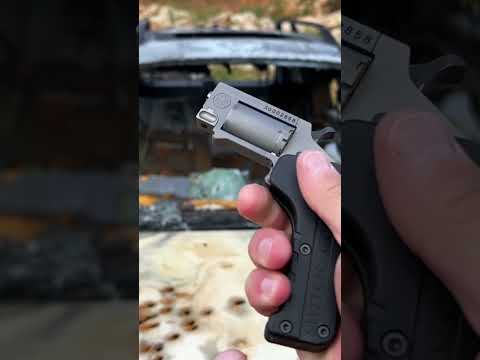
NAA 22 Mag For Self Defense?!? #shorts

Published on December 8, 2021
Duration: 0:52

This video from 704 Tactical provides a practical assessment of the North American Arms .22 Mag Mini-Revolver for self-defense. Through ballistic testing into a clay block, the content creator, identified as an experienced firearms reviewer, demonstrates the bullet's penetration and wound cavity characteristics. The analysis highlights minimal bullet expansion but significant performance for a small-caliber handgun, offering valuable insights for potential users.

Quick Summary

The North American Arms .22 Mag Mini-Revolver was tested for self-defense potential by 704 Tactical. Ballistic analysis showed .22 Magnum rounds penetrated approximately one foot into a clay block, creating a substantial wound cavity. Notably, the bullet did not exhibit significant expansion ('mushrooming'), highlighting its performance characteristics for a small-caliber handgun.

Chapters

  1. 00:00Introduction & Setup
  2. 00:10Live Fire Test
  3. 00:20Ballistic Analysis

Frequently Asked Questions

How does the NAA .22 Mag Mini-Revolver perform in ballistic tests for self-defense?

In tests by 704 Tactical, the NAA .22 Mag Mini-Revolver's .22 Magnum rounds penetrated about a foot into a clay block, creating a significant wound cavity despite minimal bullet expansion.

What are the key features of the NAA .22 Mag Mini-Revolver tested?

The tested NAA .22 Mag Mini-Revolver is a single-action firearm with a 5-round capacity, chambered in .22 Magnum, and features a stainless steel frame, making it a compact option for concealed carry.

Does .22 Magnum ammunition expand upon impact?

During ballistic testing into a clay medium, the .22 Magnum bullet recovered showed no significant 'mushrooming' or expansion, indicating it primarily relies on penetration and wound channel creation.

What is the significance of bullet expansion in self-defense?

Bullet expansion, or 'mushrooming,' increases the bullet's diameter upon impact, leading to greater energy transfer and a wider wound channel, which is often desired for self-defense effectiveness.

Related News

All News →

More Reviews Videos You Might Like

More from 704 TACTICAL

View all →