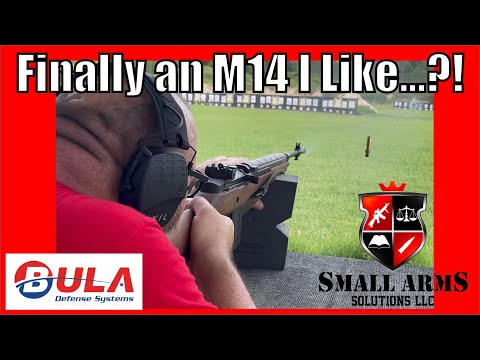
NOTHING MAKES SENSE ๐Ÿ˜ญ: Springfield Armory M1As [Review]

Published on October 15, 2019
Duration: 15:49

This review from Pew Pew Tactical, featuring John C., delves into the Springfield Armory M1A platform, specifically the National Match and SOCOM 16 variants. The expert assessment highlights historical context, performance in Vietnam, and detailed accuracy testing. The video concludes that the M1A is more of a sentimental or historical purchase than a performance-driven modern rifle, emphasizing its sensitivity to ammunition and mounting solutions.

Quick Summary

The Springfield M1A, particularly the SOCOM 16 and National Match variants, is reviewed as a rifle with significant historical value but limitations for modern performance. Accuracy testing revealed high sensitivity to ammunition type and optic mounting. While the National Match can achieve 1.25 MOA and the SOCOM 16 around 2 MOA with specific loads and factory tuning, they are generally considered sentimental purchases over practical, consistent performers compared to modern platforms.

Chapters

  1. 00:00Introduction and Legacy
  2. 01:05Historical Context and NATO Standardization
  3. 01:57Vietnam War Performance
  4. 03:05M1A National Match and SOCOM 16 Features
  5. 03:43Ergonomics and Design Issues
  6. 06:41Initial Accuracy Testing Frustrations
  7. 10:01Manufacturer Consultation and Factory Testing
  8. 11:15Final Range Results with Optics
  9. 13:01Conclusion and Niche Appeal

Frequently Asked Questions

What are the key differences between the Springfield M1A SOCOM 16 and National Match models?

The SOCOM 16 features a shorter 16.25-inch barrel, a polymer stock, and a scout-style rail, making it more compact. The National Match has a longer 22-inch barrel, a traditional glass-bedded walnut stock, and is hand-built for competition, typically offering superior inherent accuracy.

Why did the M14 (and by extension, the M1A) perform poorly in Vietnam?

The M14 was too long for jungle warfare, difficult to control in full-auto, and its wooden stocks would swell in humidity, negatively impacting accuracy. The 7.62x51mm NATO round, while powerful, was also less ideal for the close-quarters combat common in Vietnam compared to intermediate cartridges.

Is the Springfield M1A a good choice for modern combat or competition?

According to the review, the M1A is generally considered more of a sentimental or historical purchase rather than a performance-driven choice for modern applications. It lacks the consistency of contemporary platforms like AR-10 variants and is highly sensitive to ammunition and setup.

What factors influence the accuracy of a Springfield M1A?

The M1A's accuracy is significantly influenced by ammunition type, with match-grade loads yielding better results. Optic mounting solutions and the rifle's inherent design sensitivities also play a crucial role, requiring careful attention for optimal performance.

Related News

All News โ†’

More Reviews Videos You Might Like

More from Pew Pew Tactical

View all โ†’