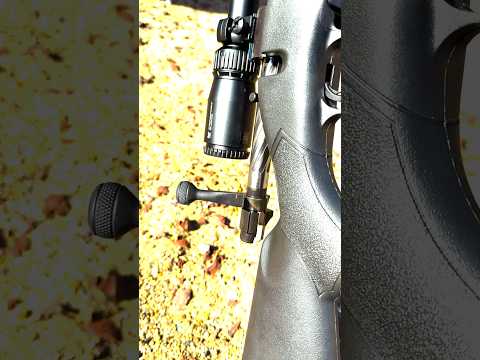
Remington Timeline: 1959

Published on October 24, 2016
Duration: 2:00

This video details the revolutionary Remington Model 66 autoloading rimfire rifle, introduced in 1959. It highlights the rifle's innovative one-piece integral stock and receiver made from injection-molded plastic, a significant departure from traditional wood stocks. The video emphasizes Remington's extensive field testing to address concerns about durability, accuracy, and dependability, and notes the rifle's subsequent success and market acceptance.

Quick Summary

The Remington Model 66, introduced in 1959, was a groundbreaking rifle featuring a one-piece integral stock and receiver made from injection-molded plastic. It underwent extensive field testing to ensure durability, accuracy, and dependability, becoming Remington's most successful .22 caliber rifle with over 1 million units produced.

Chapters

  1. 00:06Introduction of the Revolutionary Model 66
  2. 00:15Model 66: One-Piece Integral Stock and Receiver
  3. 00:24DuPont's Influence on Remington Technology
  4. 00:33Challenges in Synthetic Rifle Fabrication
  5. 00:42Extensive Field Testing Program
  6. 00:48Dependability in Adverse Conditions as Selling Point
  7. 00:55Enthusiastic Market Acceptance and Demand
  8. 01:02Stock Construction: Zytel, Bonding, and Reinforcement
  9. 01:18Shell Deflector Shield Feature
  10. 01:25Remington's Lifetime Stock Guarantee
  11. 01:36World Aerial Target Record Achievement
  12. 01:44Nylon 66: Remington's Most Successful .22 Caliber
  13. 01:54Remington's Leadership in Firearm Innovation

Frequently Asked Questions

What made the Remington Model 66 rifle revolutionary in 1959?

The Remington Model 66 was revolutionary because it was one of the first mass-produced rifles to feature a one-piece integral stock and receiver made entirely of injection-molded plastic, a significant departure from traditional wood stocks.

What were the main challenges in developing the Remington Model 66?

Developing the Model 66 involved overcoming three main challenges: ensuring the synthetic rifle would possess adequate durability, maintain accuracy, and provide reliable dependability, especially in adverse conditions.

How did Remington ensure the quality and performance of the Model 66?

Remington conducted the most extensive field testing program in its history for the Model 66. The rifle's dependability in adverse conditions was a primary selling point, backed by a lifetime guarantee on its synthetic stock.

What was the market reception and production success of the Remington Model 66?

The Model 66 was accepted enthusiastically by the market, with demand exceeding projections and production capacity during its introductory year. It ultimately became Remington's most successful .22 caliber rifle, with over 1 million units produced.

Related News

All News →

More Reviews Videos You Might Like

More from Guns & Ammo

View all →