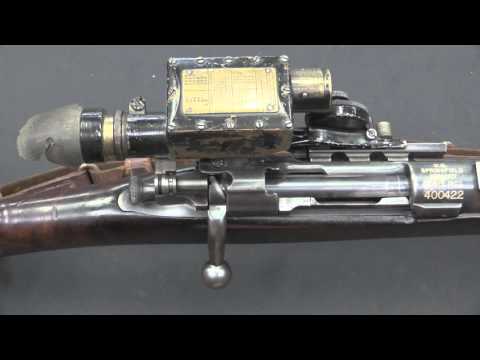
Ross WWI Sniper Rifle w/ Winchester A5 Scope

Published on August 23, 2021
Duration: 6:03

This entry details the Ross Mark III WWI sniper rifle, modified in the field with a Winchester A5 scope. It highlights the rifle's exceptional accuracy despite known reliability issues in adverse conditions, its suitability as a sniper platform, and the specific mechanical features of the Winchester A5 scope, including its external adjustment system. The analysis is informed by the expertise of Ian McCollum, a recognized authority on historical firearms.

Quick Summary

The Ross Mark III WWI sniper rifle, chambered in .303 British, was prized for its exceptional accuracy despite reliability concerns in trenches. Modified in the field, it featured a Winchester A5 5x scope with an external adjustment system, making it a formidable sniper platform. Markings like 'DA' indicate Canadian service.

Chapters

  1. 00:00Introduction to Ross Mark III Sniper Rifle
  2. 01:26Ross Rifle Strengths as Sniper Platform
  3. 02:38Field Modifications and Scope Mounting
  4. 03:32Winchester A5 Scope Mechanics
  5. 04:22Stock Markings and Provenance

Frequently Asked Questions

What made the Ross Mark III rifle suitable for sniping during WWI?

Despite known reliability issues in muddy conditions, the Ross Mark III was exceptionally accurate, originally designed for long-range competitions. This inherent accuracy made it an outstanding platform for sniping, and it remained in Canadian inventory for this role even after the infantry adopted the SMLE.

How did the Winchester A5 scope differ from standard WWI scopes?

The Winchester A5 scope, a 5x magnification optic, was often used as a high-quality alternative to standard issue scopes like the Warner & Swasey Model 1913. A key feature was its external adjustment system, where knobs physically moved the entire scope tube within its mounts.

What kind of modifications were made to the Ross Mark III for sniper use?

Modifications were typically armorer field modifications rather than factory ones. These included removing iron sights, cutting down the forestock for weight and camouflage, and adding specialized mounting brackets to the receiver and front handguard for the scope.

What do the markings on the Ross Mark III stock signify?

Markings like 'III' and '1914' indicate it's a Mark III Ross manufactured in 1914. The 'DA' stamp specifically suggests Canadian military service, pointing to its use within the Canadian inventory during WWI.

More Reviews Videos You Might Like

More from Forgotten Weapons

View all →