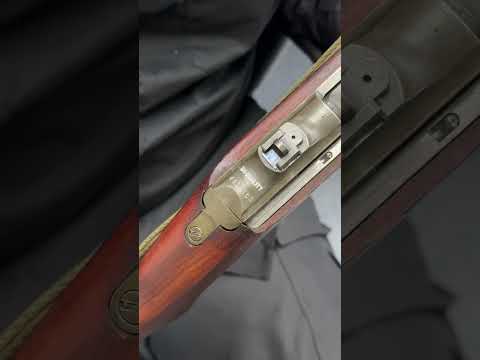
Show and Tell: WW2 Collectibles & Firearms | Episode 6

Published on February 17, 2021
Duration: 16:01

This video showcases several World War II-era collectibles, including a heavily corroded StG 44 found in a river, a dug-up Stalingrad helmet, and various German badges. It also features a rare nickel-plated Walther PPK with a Polish military proof mark and a Walther PP with an RZM marking, discussing their historical context and rarity. The presenter emphasizes the condition and provenance of each item, highlighting their value as historical artifacts.

Quick Summary

A heavily corroded StG 44, found in a river in 1980, is considered a non-gun relic due to extensive rust and missing parts, making it unusable. A rare nickel-plated Walther PPK with a 'G2' proof mark indicates it was part of a special order of about 200 guns sent to the Polish military in 1938.

Chapters

  1. 00:09Introduction & Springfield 1911 Mention
  2. 01:05River Found StG 44 Relic
  3. 02:27StG 44 Skeleton vs. Functional
  4. 03:06StG 44 Condition Details
  5. 05:22Stalingrad Helmet Find
  6. 06:09Stalingrad Helmet Details
  7. 07:03Gestapo & Criminal Police Badges
  8. 08:03Why Allies Searched for Gestapo
  9. 09:06Badges Thrown in Rivers
  10. 09:52Rare Nickel Plated PPK
  11. 10:24Polish Vz G2 Proof Explained
  12. 11:16Germany Selling Guns to Poland
  13. 11:54RZM Marked PPK & Holster
  14. 12:19Holster Markings & Vet Info
  15. 13:30RZM Marked Walther PP (Fake)
  16. 14:10Identifying the Fake PP
  17. 15:33Fantasy Gun Explanation
  18. 15:44Outro & Thanks

Frequently Asked Questions

What is the condition of the StG 44 found in the river?

The StG 44 found in the river is in extremely poor condition, described as a 'skeleton' or 'non-gun relic.' It is heavily corroded, flimsy, falling apart, and has numerous holes throughout the receiver, making it completely unusable.

What makes the nickel-plated Walther PPK with the G2 proof mark rare?

This Walther PPK is rare because the 'G2' proof mark indicates it was part of a special order of only about 200 guns sent to the Polish military in 1938, before the German invasion of Poland.

Why were Gestapo and criminal police badges often thrown into rivers?

Agents of the Gestapo and criminal police threw their badges and IDs into rivers at the end of WWII to evade capture. Allies were actively searching for these individuals to prosecute them for war crimes or recruit them for intelligence work against the Soviet Union.

How can one identify a fake RZM marked Walther PP?

A key indicator of a fake RZM marked Walther PP is the presence of straw-colored small parts and specific slide numbering that deviates from original Walther production. Authentic Walthers from that era did not feature straw-colored small parts.

More Reviews Videos You Might Like

More from Legacy Collectibles

View all →