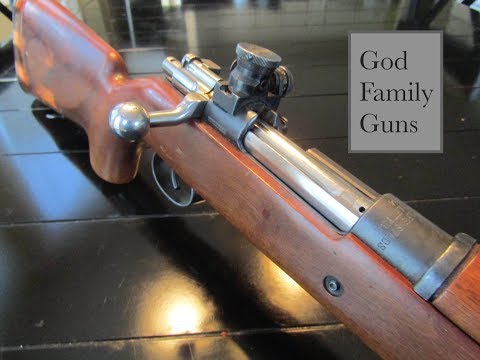
Swedish Mauser Carbines - m/94 and m/94-14

Published on June 20, 2017
Duration: 17:05

This review details the Swedish Mauser m/94 and m/94-14 carbines, chambered in 6.5x55mm. It covers their historical adoption from Remington Rolling Blocks, design evolution including the addition of a bayonet lug in the m/94-14, and production history split between Mauser Oberndorf and Carl Gustaf. The video also explains unique features like sight adjustments for spitzer ammunition and the cock-on-closing action.

Quick Summary

The Swedish Mauser m/94 carbine, chambered in 6.5x55mm, was adopted in 1894. The m/94-14 variant, introduced in 1914, added a bayonet lug. Production occurred at Mauser Oberndorf and Carl Gustaf. Unique features include sight adjustment tables for spitzer ammo and a cock-on-closing action.

Chapters

  1. 00:00Introduction: Swedish Mauser Carbines
  2. 00:41Historical Context: Sweden's Bolt-Action Transition
  3. 01:44Adoption and Design: The m/94 Carbine
  4. 02:46Production History: Mauser Oberndorf & Carl Gustaf
  5. 03:42The m/94-14 Modification: Bayonet Lug Added
  6. 04:42Ammunition and Sights: Spitzer Adaptation
  7. 05:52Receiver Markings: Manufacturer & Date
  8. 07:34Mechanical Operation: Cock-on-Closing Action
  9. 10:15Barrel Length and US Import Laws
  10. 12:04Stock Features: Unit Discs & Sight Plates
  11. 15:17Authenticity and Collecting Advice

Frequently Asked Questions

What are the key differences between the Swedish Mauser m/94 and m/94-14 carbines?

The primary difference is the addition of a bayonet lug on the m/94-14 model, introduced in 1914. The original m/94 carbine, adopted for cavalry, did not have a bayonet lug.

How did Sweden adapt its Mauser carbines for spitzer ammunition?

In 1941, Sweden adopted spitzer ammunition. Instead of recalibrating sights, they added metal or paper adjustment tables to the stocks of older carbines to compensate for the new ammunition's ballistics.

Where were the Swedish Mauser m/94 carbines produced?

Initial production of approximately 12,000 units occurred at Mauser's Oberndorf plant in Germany. Subsequent production of over 115,000 units was moved to the Carl Gustaf plant in Sweden.

What are important factors for collectors authenticating Swedish Mauser carbines?

Collectors should verify serial number ranges (under 140,000 for original m/94/m/94-14) and ensure stock features like unit discs, grasping grooves, and sight adjustment plates are correct for the carbine configuration, not a cut-down rifle.

Related News

All News →

More Reviews Videos You Might Like

More from Forgotten Weapons

View all →