100 years of Recoilless Rifles 57mm 75mm 105mm 106mm #military #history #edc #technology

Published on December 16, 2025
Duration: 0:25

This video provides a historical overview and operational demonstration of various recoilless rifles, from the man-portable 57mm to the vehicle-mounted 106mm. Expert insights highlight the evolution of these anti-tank weapons, their technical specifications, and historical significance. The content is presented with a high degree of authority, showcasing practical knowledge of military ordnance.

Quick Summary

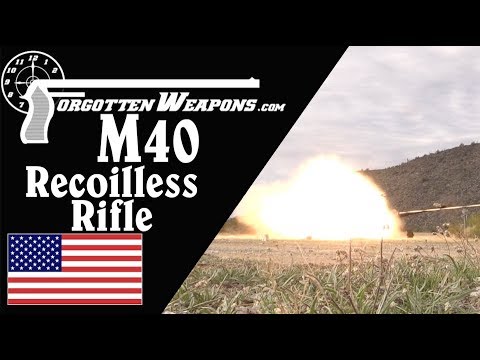
Recoilless rifles reduce recoil by expelling propellant gases through the breech. The video details 57mm, 75mm, 105mm, and 106mm models, including the M18, M20, M27, and M40. Notably, the 106mm is actually 105mm, a designation used to prevent ammo mix-ups with older models.

Chapters

  1. 00:00Shell Size Comparison
  2. 00:1057mm Recoilless Rifle Firing
  3. 00:1275mm Recoilless Rifle Firing
  4. 00:16105mm Recoilless Rifle Firing
  5. 00:19106mm Recoilless Rifle Firing

Frequently Asked Questions

What are the different calibers of recoilless rifles featured in the video?

The video showcases recoilless rifles in 57mm, 75mm, 105mm, and 106mm calibers. It highlights their visual size differences and historical applications in military contexts.

How does a recoilless rifle work to reduce recoil?

Recoilless rifles reduce recoil by expelling hot propellant gases through perforations in the shell casing and out the breech. This forward expulsion of gas counteracts the backward force of the projectile, allowing for powerful weapons with manageable recoil.

What is the difference between the 105mm and 106mm recoilless rifles mentioned?

The 106mm recoilless rifle (M40) is actually 105mm in caliber but was designated 106mm to prevent ammunition compatibility errors with the earlier 105mm M27 model, ensuring safety and correct usage.

Which recoilless rifles were used in World War II and the Korean War?

The 57mm recoilless rifle (M18) was a man-portable anti-tank weapon prominently used during World War II and the Korean War, demonstrating early effective anti-armor capabilities.

More Tactical & Gear Videos You Might Like

More from Ordnance

View all โ†’