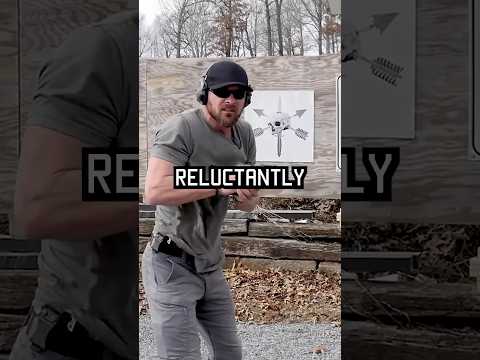
Concealed Carrier Turns The Tables on Armed Robbers

Published on March 22, 2024
Duration: 6:32

This analysis from Active Self Protection, featuring John Correia, breaks down a concealed carrier's effective response to an armed robbery in Jamaica. Correia, a recognized expert, highlights tactical concepts like 'initiative deficit' and 'purposeful compliance,' emphasizing the importance of a swift draw and decisive action. The video showcases objective training data, noting the defender met national standards for draw speed.

Quick Summary

Expert analysis from Active Self Protection details a concealed carrier's successful defense against armed robbers. Key takeaways include exploiting the 'initiative deficit,' employing 'purposeful compliance,' and achieving national standards for draw speed (approx. 1.93s). The defender effectively used 'boarding house rules' to neutralize multiple threats sequentially.

Chapters

  1. 00:00Introduction and Sponsorship
  2. 00:40Incident Overview
  3. 01:56Tactical Analysis: Initiative Deficit
  4. 03:31Draw Speed and Decision Making
  5. 05:24Multi-Target Engagement

Frequently Asked Questions

What tactical advantage does an attacker gain in a robbery?

Attackers gain an 'initiative deficit' by initiating the confrontation, controlling the tempo and environment. This allows them to dictate terms, but a prepared defender can exploit shifts in their attention to counter-attack effectively.

What is 'purposeful compliance' in self-defense?

Purposeful compliance means appearing to cooperate with an attacker while actively assessing the situation and waiting for an opportune moment to act, rather than immediate resistance or complete submission. It's about controlled de-escalation until a counter-attack is viable.

How important is draw speed in self-defense?

Draw speed is critical. Meeting national standards (around 1.93 seconds for first hit) indicates proficient training. Faster, controlled draws allow a defender to regain the initiative and neutralize threats more effectively before they can inflict harm.

What are 'boarding house rules' in self-defense?

'Boarding house rules' is a tactical concept for multi-attacker scenarios. It means engaging and neutralizing each threat sequentially, ensuring one attacker is dealt with before moving to the next, preventing them from coordinating or re-engaging.

Related News

All News →

More Tactical & Gear Videos You Might Like

More from Active Self Protection

View all →