Could Scope Eye KILL YOU? *Test*

Published on April 19, 2025
Duration: 1:00

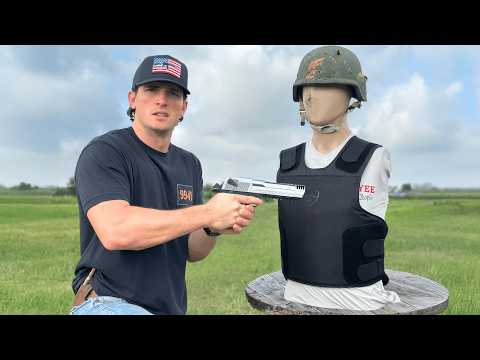
This video from Civilian Tactical demonstrates the potential severity of 'scope eye' injuries using a .50 BMG rifle and a ballistic dummy. The experiment, conducted with safety-conscious remote firing, shows a Leupold Mark 4HD scope causing a significant fracture to the dummy's skull near the eye socket. The host concludes that while not necessarily fatal, such impacts can lead to serious injury, including bone fractures and potential brain damage, emphasizing the importance of proper shooting technique and eye relief.

Quick Summary

The 'scope eye' phenomenon occurs when a rifle scope strikes a shooter's face due to recoil, often from improper eye relief. A .50 BMG test with a ballistic dummy revealed potential for severe skull fractures and brain damage, highlighting the critical importance of maintaining safe shooting distances from optics.

Chapters

  1. 00:00Experiment Introduction
  2. 00:07Defining Scope Eye
  3. 00:18Equipment and Setup
  4. 00:35The Test Shot
  5. 00:49Results and Conclusion

Frequently Asked Questions

What is 'scope eye' and how is it caused?

'Scope eye' is an injury that occurs when a rifle scope strikes a shooter's face during recoil. This typically happens when the shooter positions themselves too close to the optic, failing to maintain proper eye relief, and the firearm's recoil pushes the scope forcefully into their orbital area.

Can a scope eye injury be fatal or cause serious damage?

While a scope eye injury may not always be fatal, the test using a .50 BMG rifle and ballistic dummy showed it can cause significant damage, including deep cuts, visible skull fractures, and potential brain trauma. The severity depends on the caliber, recoil, and proximity to the scope.

What equipment was used in the 'scope eye' test?

The test utilized a high-recoil .50 BMG bolt-action rifle equipped with a Leupold Mark 4HD scope. A ballistic dummy head was used to simulate the human anatomy, positioned directly against the scope for a worst-case scenario test.

How did the testers ensure safety during the .50 BMG recoil test?

Safety was a primary concern. The testers employed a remote firing method using a long string to operate the .50 BMG rifle from a safe distance, minimizing the risk to personnel during the high-recoil experiment.

More Tactical & Gear Videos You Might Like

More from Civilian Tactical

View all →