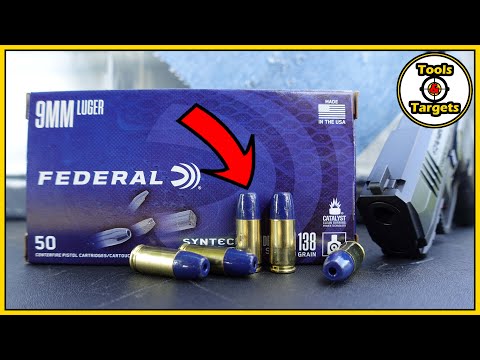
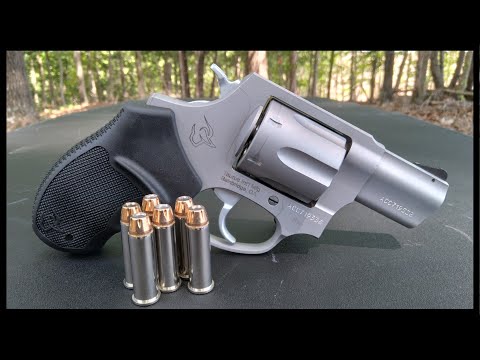
MORE Powder For More POWER?...10MM & .40S&W Sinterfire Self-Defense AMMO Test!

Published on November 11, 2023
Duration: 15:09

This video tests Sinterfire Special Duty self-defense ammunition in 10mm Auto and .40 S&W calibers using ballistics gel. The test focuses on projectile fragmentation, penetration, and velocity differences between the two calibers with identical 125-grain projectiles. While both calibers demonstrated significant fragmentation and energy dump, the instructor expresses reservations about the lightweight nature of the projectiles for self-defense applications, particularly for the 10mm.

Quick Summary

Sinterfire Special Duty ammunition uses compressed powdered metal (copper-tin) designed for fragmentation. In gel tests, 10mm averaged 1347 ft/s and .40 S&W averaged 1178 ft/s. Both fragmented significantly, with the 10mm penetrating 17.25 inches and the .40 S&W 14.5 inches. The instructor expressed reservations about the lightweight projectiles for self-defense.

Chapters

  1. 00:00Introduction & Setup
  2. 00:52Sinterfire Special Duty Ammo Explained
  3. 01:3010mm vs .40 S&W: Projectile Specs
  4. 02:03Test Firearms: Glock 20 & Glock 22
  5. 02:25Velocity Testing Setup
  6. 03:31.40 S&W Velocity Readings
  7. 04:4410mm Velocity Readings
  8. 05:08Velocity Comparison: 10mm vs .40 S&W
  9. 06:09Ballistics Gel Test: .40 S&W
  10. 07:11Ballistics Gel Test: 10mm
  11. 07:36Gel Test Results Analysis
  12. 08:52Penetration Depth: .40 S&W vs 10mm
  13. 09:08Fragmentation Field Analysis
  14. 09:53Projectile Recovery & Analysis
  15. 10:25Instructor's Concerns: Lightweight Projectiles
  16. 11:38Projectile Measurements
  17. 12:03Final Thoughts on Sinterfire Ammo
  18. 13:10Future Barrier Testing Plans
  19. 13:5310mm Performance Critique
  20. 14:13Viewer Engagement & Call to Action
  21. 14:45Channel Support & Future Content
  22. 14:57Weather Challenges & Conclusion

Frequently Asked Questions

What is Sinterfire Special Duty ammunition made of?

Sinterfire Special Duty ammunition is constructed from compressed powdered metal, specifically a copper-tin alloy. This material is sintered and heated under pressure to form the projectile, which is designed to fragment upon impact.

How did the 10mm and .40 S&W Sinterfire rounds perform in ballistic gel?

Both calibers demonstrated significant fragmentation and energy dump in ballistic gel. The 10mm penetrated 17.25 inches and the .40 S&W penetrated 14.5 inches, with both creating wide disruption channels due to fragmentation.

What were the average velocities for the tested Sinterfire ammunition?

The 10mm Auto load averaged 1347 ft/s, while the .40 S&W load averaged 1178 ft/s. The 10mm showed higher consistency with a standard deviation of 3.6 compared to 11.8 for the .40 S&W.

What are the instructor's main concerns with Sinterfire Special Duty ammunition?

The primary concern is the lightweight nature of the 125-grain projectiles, especially for the 10mm caliber. The instructor questions if this lightweight design is sufficient for effective self-defense compared to heavier traditional projectiles.

More Tactical & Gear Videos You Might Like

More from Tools&Targets

View all →