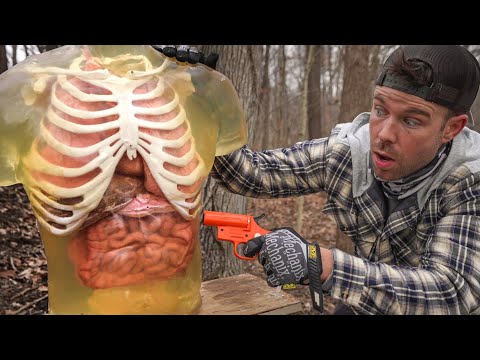
Most POWERFUL 22 Caliber Pistol?! | 5.7 vs 22tcm

Published on October 2, 2021
Duration: 17:35

This guide outlines a procedure for testing handgun ammunition performance using ballistics gel and body armor, as demonstrated by a high-level firearms reviewer. It covers the setup and execution of penetration and expansion tests for calibers like 5.7x28mm and .22 TCM, emphasizing the importance of controlled experimental conditions. The reviewer's expertise in ballistics gel standards and NIJ armor ratings ensures a thorough evaluation.

Quick Summary

Expert analysis reveals the 5.7x28mm caliber, especially armor-piercing rounds, demonstrates superior performance against Level 3A body armor compared to the .22 TCM. While the .22 TCM offers impressive fragmentation in ballistics gel, the 5.7x28mm provides better penetration capabilities, making it a more effective choice for tactical scenarios requiring barrier defeat.

Chapters

  1. 00:00Introduction: 5.7 vs .22 TCM Debate
  2. 00:54Ruger 57 Range Performance
  3. 02:17.22 TCM 9R Range Performance
  4. 04:11Body Armor Penetration Test
  5. 08:41Ballistics Gel Testing
  6. 13:31Final Assessment and Conclusion

Frequently Asked Questions

What is the primary difference in performance between 5.7x28mm and .22 TCM ammunition?

The 5.7x28mm, particularly armor-piercing variants, excels at penetrating body armor. The .22 TCM, while producing a significant muzzle blast, tends to fragment more aggressively in ballistics gel and is stopped by Level 3A armor.

Which pistol caliber, 5.7x28mm or .22 TCM, is considered more powerful for self-defense or tactical use?

Based on armor penetration tests, the 5.7x28mm is generally considered more effective for tactical applications where defeating body armor is a concern. The .22 TCM offers impressive fragmentation but lacks the same armor-defeating capability.

How did the 5.7x28mm and .22 TCM perform against Level 3A body armor?

During testing, the 5.7x28mm FN Green Tip round easily penetrated the Level 3A body armor. In contrast, the .22 TCM round, even a 39gr JHP, was stopped by the same armor panel.

What were the results of the ballistics gel tests for 5.7x28mm and .22 TCM?

The 5.7x28mm rounds showed varied expansion and tumbling in the gel. The .22 TCM, however, tended to fragment significantly and over-penetrated a 16-inch gel block, indicating less controlled energy transfer.

Related News

All News →

More Tactical & Gear Videos You Might Like

More from 1ShotTV

View all →