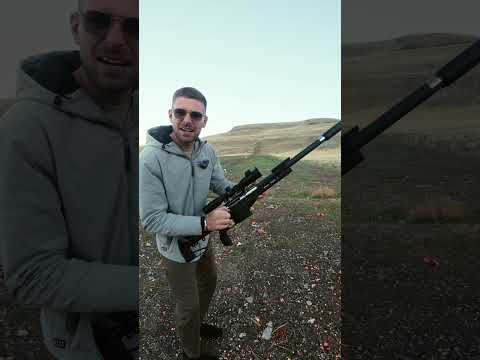
Ready Room | Suppressor Comparison

Published on February 20, 2025
Duration: 7:54

This expert-level guide from GBRS Group delves into suppressor selection for Close Quarters Battle (CQB) scenarios. The discussion emphasizes prioritizing compact firearm configurations, evaluating suppressors by length, weight, sound, and gas blowback, and highlights specific models from CGS, Dead Air, Huxwerks, and KNS. The instructors share insights on past suppressor failures and modern lock-up systems, offering practical advice for optimizing CQB platforms.

Quick Summary

For CQB, prioritize compact suppressors focusing on minimal length, weight, and effective gas blowback management. GBRS Group highlighted models like the KNS CQDC MCQ PRT (14 oz) as the lightest and smallest, while discussing the trade-offs of other CGS, Dead Air, and Huxwerks options.

Chapters

  1. 00:04Introduction to Suppressor Comparison
  2. 00:24CQB Firearm Length and Suppressor Impact
  3. 00:42CGS and Dead Air Suppressor Weights
  4. 02:32Huxwerks Flow 5.56 Suppressor
  5. 03:04KNS CQB Suppressor
  6. 03:30New KNS 3D Printed Suppressor (CQDC MCQ PRT)
  7. 04:04Performance of New KNS Suppressor
  8. 04:19Past Suppressor Issues (Old Knights)
  9. 04:50Modern Suppressor Lock-up Systems
  10. 05:06CQB Firearm Configuration Preferences
  11. 05:37Firearm Grip Angle Discussion
  12. 06:30Future Testing and Suppressor Selection
  13. 06:50Health Implications of Suppressor Gas
  14. 07:08Preference for Compact CQB Suppressors
  15. 07:22Conclusion on Smallest Suppressor
  16. 07:33Call for Viewer Interaction

Frequently Asked Questions

What are the key factors when selecting a suppressor for CQB?

For CQB, prioritize compactness. Key factors include overall length, weight, sound reduction, and managing gas blowback. The goal is a suppressor that enhances maneuverability in confined spaces without compromising firearm control or shooter comfort.

Which suppressors were discussed by GBRS Group for CQB applications?

GBRS Group discussed several suppressors: CGS PB 101 (just over 1 lb), CGS Hilos (1.5 lbs), an unspecified Dead Air model (just under 1 lb), Huxwerks Flow 5.56 (14.7 oz), KNS CQB PRT (1.08 lbs), and the new KNS CQDC MCQ PRT (14 oz), noted as the lightest and smallest.

What are the potential downsides of suppressor gas blowback?

Gas expelled from suppressors is not ideal for the shooter and can potentially lead to respiratory issues over extended periods. Effective gas blowback management is therefore a critical consideration when choosing a suppressor.

How does suppressor length affect CQB firearm usability?

Adding a long suppressor, such as a 14-inch model to a 14-inch barrel, can make a CQB firearm excessively long and difficult to manipulate effectively in confined spaces. Shorter, more compact suppressors are generally preferred.

More Tactical & Gear Videos You Might Like

More from GBRS Group

View all →