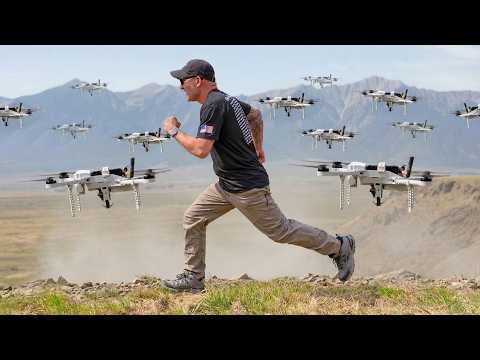
This 22-Year-Old is Building War Drones That Can Fly 600MPH 😳

Published on March 11, 2026
Duration: 0:58

This video explores the cutting-edge development of advanced drones, specifically the 'Viper' drone, capable of vertical takeoff, high speeds (600 mph), and long ranges. It also delves into the strategic importance and cost-effectiveness of stratosphere balloons for future conflict, highlighting their difficulty to intercept. The insights are presented by a 22-year-old drone builder with significant expertise in the field.

Quick Summary

The Viper drone, a 6.5-foot vertical takeoff fighter jet, can fly at 600 mph with a range of several hundred miles. Future versions will drop payloads and land vertically, costing ten times less than air-to-air missiles. Stratosphere balloons are also key, being 100-1,000 times more expensive to shoot down than deploy.

Chapters

  1. 00:00Viper Drone Introduction
  2. 00:09Viper Performance & Portability
  3. 00:17Future Drone Capabilities & Cost
  4. 00:23Stratosphere Balloons & Future Conflict
  5. 00:35Balloon Launch & Intercept Challenges
  6. 00:43Navigating & Cost-Effective Payloads

Frequently Asked Questions

What are the key capabilities of the Viper drone discussed in the video?

The Viper drone is a 6.5-foot vertical takeoff miniature fighter jet. It offers a range of several hundred miles, can fly at 600 mph, reach high altitudes, and is designed for mass manufacturing, eventually capable of dropping payloads and landing vertically.

Why are stratosphere balloons considered important for future conflicts?

Stratosphere balloons are highlighted as crucial due to their difficulty and cost of interception. Launching them to high altitudes is easy, but intercepting them requires specialized aircraft or missiles, making them a challenging and potentially cost-effective strategic asset.

How does the cost of the Viper drone compare to existing military hardware?

The Viper drone is being developed with a cost point ten times less than a current air-to-air missile. This significant cost reduction is intended to enable mass manufacturing and widespread deployment.

What makes intercepting stratosphere balloons difficult?

Intercepting stratosphere balloons is difficult because they operate at very high altitudes, typically around 80,000 feet. To engage them, missiles or aircraft must ascend to similar altitudes (60,000-80,000 feet), which is a complex and resource-intensive task.

More Tactical & Gear Videos You Might Like

More from Shawn Ryan Show

View all →