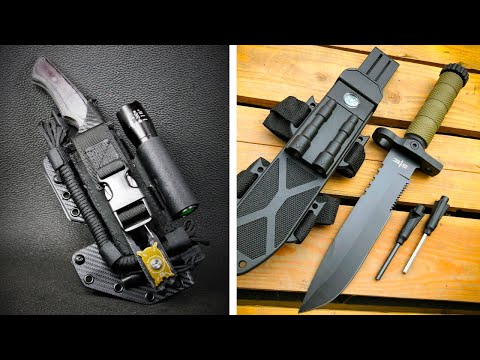
Top 10 Best Bushcraft Knives for Wilderness Survival 2022

Published on January 26, 2022
Duration: 11:35

This video provides an expert review of the top 10 bushcraft knives for wilderness survival in 2022. The instructor, demonstrating high authority, details the strengths and weaknesses of each knife, covering materials like Carbon Steel, 1095 Steel, and O1 Tool Steel, as well as blade grinds and handle materials. Key models reviewed include the Morakniv Bushcraft Survival Black C, Ontario Bushcraft Field Knife 8696, and L.T. Wright GNS.

Quick Summary

The top 10 bushcraft knives for wilderness survival in 2022 are reviewed, highlighting essential features like durable carbon steel blades (1095, O1), 90-degree spines for fire starting, and ergonomic handles. Expert insights cover blade grinds (Scandi, convex) and steel types, recommending specific models like the Ka-Bar Becker BK2 Companion for heavy tasks and the L.T. Wright GNS for comfort and versatility.

Chapters

  1. 00:00Introduction to Bushcraft Knives
  2. 00:36Mora Bushcraft Survival Black C
  3. 01:59Ontario Bushcraft Field Knife 8696
  4. 03:06Condor Bushlore
  5. 03:57Tops Knives Brothers of Bushcraft
  6. 04:53Ka-Bar Becker BK2 Companion
  7. 06:06ESEE Camp Lore RB3
  8. 07:08Helle Knives Temagami
  9. 08:02Fallkniven F1 Knife
  10. 09:15Bark River Knives Aurora
  11. 10:00L.T. Wright GNS

Frequently Asked Questions

What are the essential features of a good bushcraft knife?

A reliable bushcraft knife should have a durable blade, often made from carbon steel like 1095 or O1 tool steel, with a thickness around 3-5mm. Features like a 90-degree spine for fire starting, a comfortable handle (Micarta or wood), and appropriate blade grinds (Scandi or convex) are crucial for wilderness survival tasks.

Which bushcraft knives are recommended for heavy-duty tasks like chopping and batoning?

For heavy-duty tasks, knives like the Ka-Bar Becker BK2 Companion, featuring a thick 1/4-inch 1095 steel blade, are highly recommended. These knives are built for durability and excel at splitting wood, though they may be less suited for fine detail work.

What is the significance of blade coatings and grinds on bushcraft knives?

Blade coatings like DLC (Diamond-Like Carbon) enhance durability and rust resistance. Blade grinds, such as Scandi (strong, easy to sharpen) or convex (excellent slicing), significantly impact a knife's performance for specific bushcraft applications like wood carving or food preparation.

How do different steel types affect bushcraft knife performance?

Different steel types offer varying properties: 1095 steel is known for toughness and ease of sharpening, O1 tool steel offers good edge retention, and CPM 3V provides exceptional durability and wear resistance. VG10, often used in a laminate, balances hardness and corrosion resistance.

More Tactical & Gear Videos You Might Like

More from Survival Gear

View all →