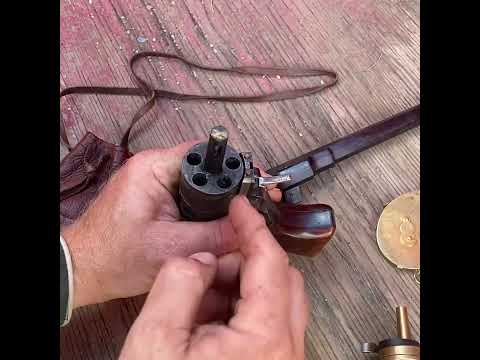
1847 Walker - Loading and Firing #shorts

Published on November 25, 2024
Duration: 2:47

This guide details the proper loading and firing procedure for the 1847 Colt Walker revolver. It emphasizes using historically appropriate powder flasks and volumetric measures for consistent powder charges, recommending Colt's advised maximum of 50 grains. The process involves filling chambers, seating charges with the loading rod, and capping the nipples, with a crucial reminder about the importance of cleaning black powder firearms.


Quick Summary

For loading the 1847 Colt Walker, use a standard Civil War era powder flask with a volumetric measure, and adhere to Colt's recommended maximum charge of 50 grains. Overcharging, like with 60 grains, risks dangerous cylinder ruptures. Regular cleaning is crucial due to black powder fouling.

Chapters

  1. 00:02Cylinder Charging Methods
  2. 00:16Powder Flask Issues
  3. 00:30Recommended Powder Flask
  4. 00:40Risks of Overcharging
  5. 00:52Recommended Powder Charge
  6. 01:14Loading Procedure
  7. 01:37Seating the Charge
  8. 01:40Percussion Caps
  9. 01:44Conical Bullet Size
  10. 02:07Firing and Fouling
  11. 02:15Black Powder Fouling
  12. 02:35Cap Issues and Solutions
  13. 02:421847 Walker Mode

Frequently Asked Questions

What is the recommended maximum powder charge for the 1847 Colt Walker revolver?

Colt himself advised that the maximum powder charge for the 1847 Colt Walker should not exceed 50 grains. Exceeding this, such as with 60-grain charges, can lead to dangerous cylinder ruptures.

What type of powder flask is recommended for loading the 1847 Colt Walker?

While the original Colt plunger-style flask exists, it's inconsistent. For practical and safe loading, a standard Civil War era powder flask with a volumetric measure attached to the end is recommended for accurate powder throws.

Why is cleaning important for the 1847 Colt Walker when using black powder?

Black powder creates significant fouling, which can make the firearm sticky and affect its operation. The 1847 Walker has features to mitigate fouling, but regular cleaning is essential, especially after firing with large powder charges.

What are the risks associated with overcharging the 1847 Colt Walker?

Overcharging the 1847 Colt Walker, particularly with charges like 60 grains, significantly increases the risk of cylinder rupture. This was a known issue historically, leading to many cylinders being returned.

More Training & Techniques Videos You Might Like

More from InRangeTV

View all →