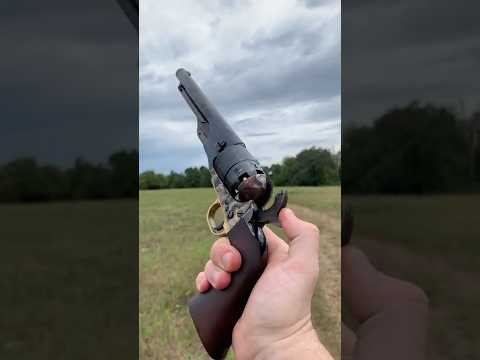
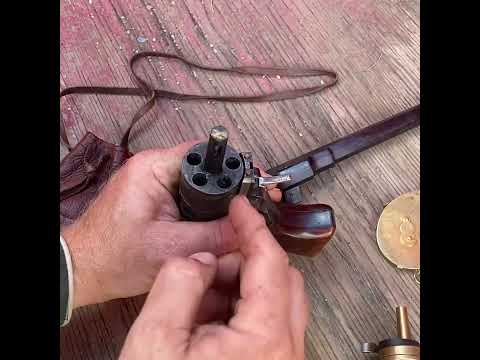
1850-60's Confederate Swivel Breech Rifle

Published on May 4, 2020
Duration: 8:36

This guide details the technique for loading and firing the 1850-60's Confederate Swivel Breech Rifle, as demonstrated by an expert from InRangeTV. It covers the process of loading powder, seating round balls, capping the nipples, and firing both barrels, emphasizing the unique swivel breech mechanism. The guide also includes essential safety warnings for handling muzzle-loading firearms.

Quick Summary

The 1850-60's Confederate Swivel Breech Rifle offers a unique advantage of two rapid shots via its rotating breech mechanism. However, its reloading process, using round balls and loose powder, is considerably slower than standard Civil War muskets like the 1861 or Enfield, which utilized Minie balls for more efficient sustained fire.

Chapters

  1. 00:00Introduction: Confederate Swivel Breech Rifle
  2. 00:23Civil War Context & Availability
  3. 00:41Swivel Breech Advantage: Two Shots
  4. 01:04Loading Options: Round Ball vs. Minie Ball
  5. 01:30Live Fire Demonstration
  6. 01:40Reloading Challenges & Minie Ball Comparison
  7. 02:15Swivel Breech Reloading Process Detailed
  8. 02:26Confederate Equipment & Powder Loading
  9. 03:16Ball Seating & Ramming Technique
  10. 04:08Capping the Nipples
  11. 04:43Second Firing & Conclusion on Utility
  12. 06:50Historical Significance & Precursor to Revolvers
  13. 07:53Channel Support & Outro

Frequently Asked Questions

How does the swivel breech mechanism work on the 1850-60's Confederate rifle?

The swivel breech mechanism allows the shooter to fire two shots in quick succession. After firing the first barrel, the breech is manually rotated to bring the second loaded barrel into position for firing, offering a rapid follow-up shot.

What are the advantages and disadvantages of the Confederate Swivel Breech Rifle compared to standard Civil War muskets?

The primary advantage is the ability to fire two shots rapidly. However, its main disadvantage is significantly slower reloading compared to 1861 Muskets or Enfields, which used Minie balls, making it less suitable for sustained combat.

What is the typical loading process for the 1850-60's Confederate Swivel Breech Rifle?

The rifle is loaded muzzle-first with black powder (around 70 grains demonstrated), followed by a round ball, which is then seated firmly with a ramrod. Percussion caps are placed on the nipples before firing.

Why were Minie balls advantageous for Civil War muskets?

Minie balls, with their hollow bases, expanded upon firing to engage the rifling, improving accuracy and sealing the bore. This also made them easier to load, especially as the firearm fouled, compared to round balls.

More Training & Techniques Videos You Might Like

More from InRangeTV

View all →