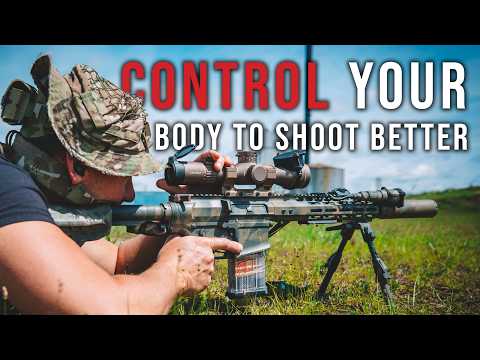
3 SHOOTING MISTAKES & How to Fix Them

Published on October 18, 2024
Duration: 19:55

This guide, presented by an expert from Thompson/Center Arms, focuses on three critical shooting mistakes and their solutions. It covers achieving a Natural Point of Aim (NPOA) for stability, mastering trigger control to overcome target panic, and the benefits of shooting with both eyes open for improved awareness. The instruction emphasizes fundamental techniques for becoming a better marksman.


Quick Summary

A Thompson/Center Arms expert details three common shooting errors: incorrect Natural Point of Aim (NPOA) for stability, poor trigger control causing 'target panic,' and shooting with one eye closed, which hinders awareness. Solutions include proper body alignment, smooth trigger pull with follow-through, and keeping both eyes open.

Chapters

  1. 00:00Introduction to Shooting Fundamentals
  2. 00:16Mistake 1: Natural Point of Aim (NPOA)
  3. 02:11NPOA in Hunting Blinds
  4. 07:08Mistake 2: Trigger Control
  5. 11:09Mistake 3: Shooting with One Eye Closed

Frequently Asked Questions

What are the three common shooting mistakes discussed by the Thompson/Center Arms expert?

The expert identifies three key mistakes: incorrect Natural Point of Aim (NPOA) leading to instability, poor trigger control often linked to 'target panic,' and the disadvantage of shooting with only one eye open, which reduces awareness.

How can a shooter improve their Natural Point of Aim (NPOA)?

For NPOA, align your body directly behind the rifle in the prone position, pulling it into your shoulder pocket for stability. In blinds, adjust rest height for an upright posture to avoid instability and scope bite.

What is the recommended solution for 'target panic' in shooting?

To overcome 'target panic,' focus on a smooth, consistent trigger pull and maintain follow-through. Visualize the shot impacting behind the reticle rather than trying to time the shot precisely.

Why is shooting with both eyes open beneficial?

Shooting with both eyes open enhances situational awareness, allowing you to better track targets and surroundings. It also reduces eye strain during prolonged observation periods, contributing to better overall performance.

More Training & Techniques Videos You Might Like

More from Thompson/Center Arms

View all →