A few drills to help you focus on input to the gun

Published on December 8, 2025
Duration: 15:41

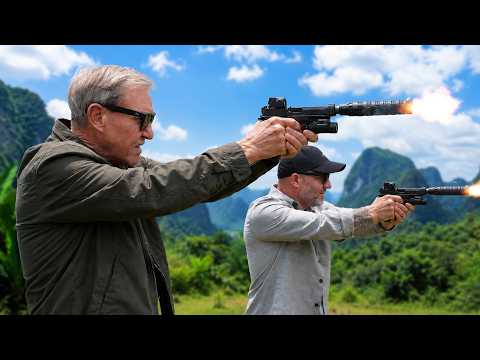
This video by Joel Park, a firearms instructor, focuses on improving trigger control and managing firearm input, particularly for triggers with a defined wall versus a rolling break. He introduces the 'Trigger Control at Speed' drill, emphasizing continuous, rolling pressure to prevent influencing the firearm during the shot. The content is suitable for intermediate shooters looking to refine their marksmanship fundamentals.


Quick Summary

The 'Trigger Control at Speed' drill is a firearms training technique where you react to a random cue and immediately press the trigger with continuous, rolling pressure. This helps shooters execute shots without influencing the firearm's movement, improving accuracy and recoil management.

Chapters

  1. 00:00Introduction: Input to the Gun
  2. 00:07Trigger Types: Defined Wall vs. Rolling Break
  3. 00:26Apex Trigger on M&P
  4. 00:43Walther PDP Trigger
  5. 01:07Glock 47 Tactical Trigger
  6. 01:32Smooth vs. Non-Smooth Trigger Breaks
  7. 02:14The Challenge of Defined Walls
  8. 02:37Ideal Firearm Handling: Less is More
  9. 03:03Managing Recoil and Sight Movement
  10. 03:26Impact of Sight Movement at Distance
  11. 03:45The Principle: Do Nothing Different
  12. 04:27Why Light Triggers Can Be Problematic
  13. 04:54Instructor's Favorite Triggers
  14. 05:23Instructor's Trigger Press Process
  15. 06:09Apex Trigger Process
  16. 06:41Treating All Triggers the Same
  17. 07:04Awareness of Input and Breaks
  18. 07:22Drill: Trigger Control at Speed
  19. 07:37Trigger Control at Speed: The Goal
  20. 08:01Avoiding 'Prep Press'
  21. 08:16Drill Variations: Finger Placement
  22. 08:46Universality of the Technique
  23. 09:21Listener Question: Grip Breakdown Under Recoil
  24. 09:54Single Shot Double Drill
  25. 10:56Analysis of the Single Shot Double Drill
  26. 11:11The Need for Gun Return Input
  27. 12:17Revisiting Trigger Control at Speed
  28. 12:36Ways to Cheat the Drill
  29. 12:58Drill: Progressive Return
  30. 13:28Observing Input Changes in Progressive Return
  31. 13:54Focusing on Firing Hand Feelings
  32. 14:38Understanding Input for Rapid Fire Pairs
  33. 14:55Continuous Improvement in Trigger Control
  34. 15:24Conclusion and Q&A

Frequently Asked Questions

What is the 'Trigger Control at Speed' drill for firearms?

The 'Trigger Control at Speed' drill involves aiming a firearm with your finger off the trigger, reacting to a random beep, and then immediately pressing the trigger with continuous, rolling pressure. The goal is to execute the shot without influencing the firearm's movement.

How does a defined trigger wall differ from a rolling trigger break?

A defined trigger wall offers a distinct point of resistance before the shot breaks, providing a tactile cue. A rolling trigger break has a more gradual increase in resistance throughout the pull, without a sharp, defined wall, requiring continuous pressure application.

What is the 'Progressive Return Drill' for improving shooting?

The 'Progressive Return Drill' involves firing increasing shot strings (1, 2, 3, 4, and 5 shots) and observing how the firearm tracks and how your input changes with each additional shot. This helps identify and correct issues with recoil management and trigger manipulation.

Why is it important to avoid 'prep press' when shooting?

'Prep press' involves pressing the trigger partway, stopping, and then pressing the rest. This technique can lead to influencing the gun's movement as you re-acquire the aiming point or apply final pressure, hindering accuracy.

More Training & Techniques Videos You Might Like

More from Joel Park

View all →