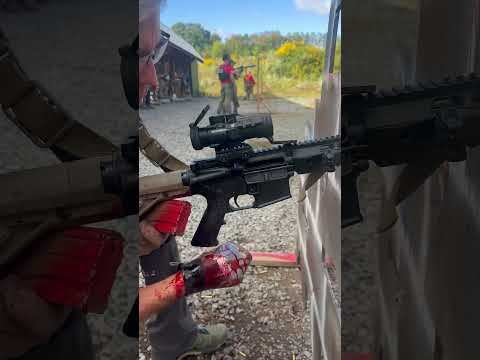
AR15 Gunshot Wound Man Down training #tactics #tacticalshooter #combat

Published on June 15, 2025
Duration: 2:32

This video demonstrates critical tactical medicine techniques for managing a casualty with gunshot wounds. It covers immediate pressure application, chest seal placement for penetrating chest trauma, wound packing, and basic casualty assessment including responsiveness and breathing. The instruction emphasizes rapid intervention and stabilization in a combat or tactical scenario.


Quick Summary

Tactical medicine training focuses on immediate life-saving interventions for trauma casualties. Key skills include applying direct pressure to wounds, using chest seals for penetrating chest trauma, wound packing for severe bleeding, and assessing/managing airway and breathing in unconscious individuals.

Chapters

  1. 00:00Initial Response & Pressure
  2. 00:13Assessing and Managing Wounds
  3. 00:20Chest Seal Application
  4. 00:32Wound Management & Pressure
  5. 00:45Casualty Movement & Support
  6. 01:01Managing Back Wounds
  7. 01:17Secondary Checks & Bandaging
  8. 01:39Airway and Breathing Assessment
  9. 01:53OPA Insertion Technique
  10. 02:06OPA Measurement and Placement

Frequently Asked Questions

What are the immediate steps for managing a gunshot wound to the leg?

Immediately apply direct pressure to the wound to control bleeding. If available, use a tourniquet above the wound if it's severe and life-threatening. Ensure the casualty is moved to a safe location if possible.

How do you properly apply a chest seal for a gunshot wound?

Clean the wound area if possible. Peel the backing off the chest seal and apply it directly over the wound, ensuring a complete seal around the edges to prevent air from entering the chest cavity.

What is the purpose of an OPA in casualty care?

An Oropharyngeal Airway (OPA) is used to maintain an open airway in an unconscious casualty by preventing the tongue from obstructing the passage of air to the lungs. It's inserted into the mouth.

How do you assess an unconscious casualty's breathing?

Use the head-tilt/chin-lift maneuver to open the airway. Then, look, listen, and feel for breathing for no more than 10 seconds. Check for chest rise and fall.

More Training & Techniques Videos You Might Like

More from Ghost Firearms Training LLC

View all β†’