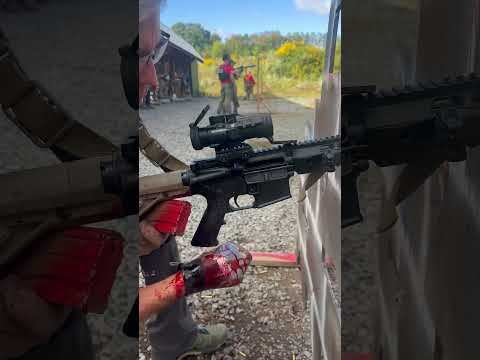
AR15 Man Down Drill Gunshot Wound TCCC #tactics #tacticalshooter #military #tactical

Published on June 28, 2025
Duration: 2:17

This video demonstrates a Tactical Combat Casualty Care (TCCC) 'Man Down Drill' focusing on immediate life-saving interventions. It covers applying chest seals for penetrating chest trauma, managing brain wounds with pressure, controlling secondary bleeding, and basic airway management using an OPA for an unconscious but breathing casualty. The drill emphasizes rapid assessment and intervention in a tactical scenario.


Quick Summary

A TCCC 'Man Down Drill' emphasizes immediate life-saving actions. This includes applying chest seals for penetrating chest wounds, managing brain wounds with direct pressure, controlling secondary bleeding, and assessing airway and breathing for unconscious casualties, potentially using an OPA for airway patency.

Frequently Asked Questions

What are the key steps in a TCCC Man Down Drill for immediate casualty care?

A TCCC Man Down Drill focuses on rapid assessment and intervention. Key steps include identifying and treating life-threatening bleeding with tools like chest seals for chest wounds, managing brain wounds with direct pressure, controlling secondary bleeding, and assessing airway and breathing for unconscious casualties.

How is a chest wound managed in a tactical combat casualty care scenario?

In TCCC, a penetrating chest wound is immediately managed by applying a chest seal to prevent air from entering the chest cavity and causing a tension pneumothorax. Direct pressure is also applied to control any external bleeding.

When is an Oropharyngeal Airway (OPA) used in tactical medicine?

An Oropharyngeal Airway (OPA) is used in tactical medicine for unconscious casualties who are still breathing. It helps to maintain an open airway by preventing the tongue from obstructing the pharynx, thus facilitating breathing.

What is the correct technique for inserting an Oropharyngeal Airway (OPA)?

When inserting an Oropharyngeal Airway (OPA), the beveled edge should be oriented towards the patient's septum. The airway is then inserted into the mouth and rotated 90 degrees as it passes the tongue to ensure proper placement and airway patency.

More Training & Techniques Videos You Might Like

More from Ghost Firearms Training LLC

View all →