Best Kept Secrets to Revolver Reloads

Published on January 20, 2025
Duration: 1:07

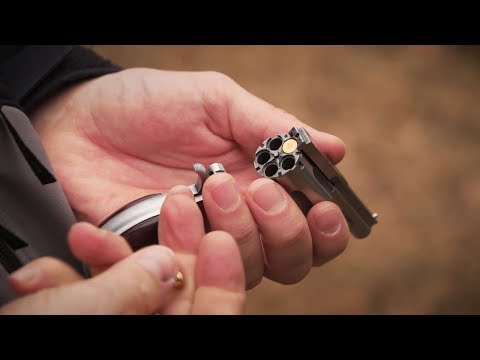
This video demonstrates a partial revolver reload technique, focusing on efficiency in a tactical situation. The instructor explains how to quickly eject only spent casings, insert new rounds, and re-engage without necessarily performing a full reload. This method is presented as a way to maintain readiness when not all chambers are empty.


Quick Summary

A partial revolver reload is a tactical technique where only spent casings are ejected and new rounds are inserted into available chambers. This method, demonstrated by opening the gun, lifting the ejector, and inserting cartridges, allows for quicker replenishment than a full reload, keeping the shooter ready.

Chapters

  1. 00:02Introduction to Reload Drills
  2. 00:12Partial Reload Technique Explained
  3. 00:16Step-by-Step Partial Reload
  4. 00:34Full Reload Method
  5. 00:53Importance of Partial Reloads

Frequently Asked Questions

What is a partial revolver reload?

A partial revolver reload involves ejecting only the spent casings from the cylinder and inserting new rounds into the available chambers. This technique allows the shooter to quickly replenish ammunition without performing a full reload, maintaining readiness in a tactical situation.

How do you perform a partial reload on a revolver?

To perform a partial reload, open the revolver, lift the ejector rod to eject spent casings, isolate and remove only the spent ones, insert new cartridges into the cylinder, and then close the revolver.

When is a partial revolver reload most useful?

A partial revolver reload is most useful in tactical scenarios where not all chambers are empty, but some ammunition needs to be replaced quickly. It allows the shooter to return to action faster than a full reload, especially if time is critical.

Can stripper clips be used for partial revolver reloads?

Yes, stripper clips can be used to facilitate partial revolver reloads. They can help in quickly inserting multiple rounds into the cylinder after ejecting spent casings, potentially speeding up the process.

More Training & Techniques Videos You Might Like

More from Gun Talk Media

View all →