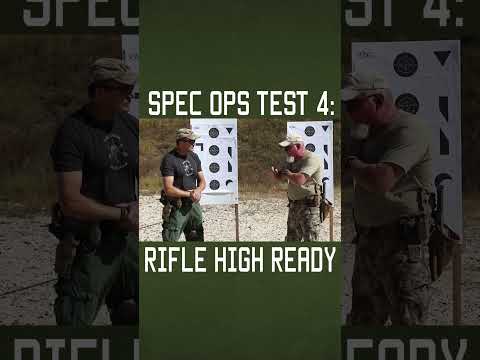
CQB 101: Low Ready, High Ready, and Depressed Muzzle

Published on March 29, 2025
Duration: 7:28

This video by Matth Kish of Tactical Hive provides expert instruction on essential CQB weapon handling techniques: Low Ready, High Ready, and Depressed Muzzle. He emphasizes maintaining muzzle discipline and control, particularly when operating in a team stack. The instruction focuses on safe weapon transitions and efficient threat engagement within confined spaces.


Quick Summary

In CQB, the Low Ready position requires the muzzle to be pointed down with the buttstock elevated above your shoulder and isolated. This ensures safety by not flagging teammates in front of you and allows for a direct 'punch out' to engage threats efficiently.

Chapters

  1. 00:00Introduction to CQB Weapon Positions
  2. 00:20Understanding the Low Ready
  3. 01:03Common Low Ready Mistakes
  4. 01:23Correct Low Ready Technique
  5. 03:09Understanding the High Ready
  6. 03:16High Ready Mistakes and Solutions
  7. 03:35Correct High Ready Technique
  8. 04:04Weapon Control and Team Tactics
  9. 04:40Understanding the Depressed Muzzle
  10. 04:51Depressed Muzzle Technique Explained
  11. 05:14Room Clearing with Depressed Muzzle
  12. 05:38Depressed Muzzle for Threat Hunting
  13. 06:00Recap: Low Ready Safety
  14. 06:22Recap: High Ready Safety
  15. 06:47Transitioning from Ready to Engagement
  16. 07:13Conclusion and Call to Action

Frequently Asked Questions

What is the correct way to hold a firearm in the Low Ready position during CQB?

In CQB, the Low Ready position requires the muzzle to be pointed down with the buttstock elevated above your shoulder and isolated. This ensures safety by not flagging teammates in front of you and allows for a direct 'punch out' to engage threats efficiently.

How should the High Ready position be adopted in CQB to maintain safety?

For the High Ready in CQB, isolate the buttstock in your armpit and point the muzzle upwards. This prevents flagging taller teammates ahead of you and allows for a controlled transition to engage threats when necessary.

What is the purpose of the Depressed Muzzle technique in room clearing?

The Depressed Muzzle technique in room clearing allows you to look over the top of your sights, using your eyes and brain to process the environment. The muzzle is lowered, and you scan your sectors with the firearm in a trailing position, not getting 'sucked into' the optic.

Why is muzzle discipline crucial in CQB team tactics?

Muzzle discipline is paramount in CQB to prevent accidental engagement of teammates. Proper Low and High Ready stances, along with controlled transitions, ensure the firearm is always pointed in a safe direction until a threat is identified and engaged.

More Training & Techniques Videos You Might Like

More from Tactical Hyve

View all →