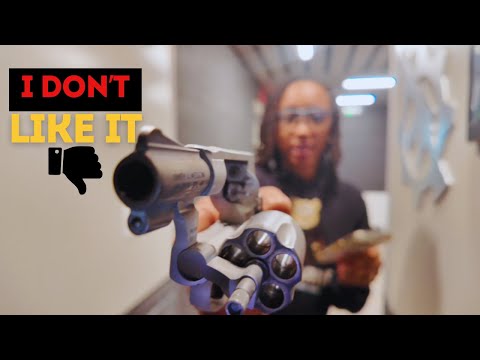
Daily Defense #21: Shooting a Revolver

Published on September 28, 2020
Duration: 4:17

Jeff Gonzalez of Trident Concepts provides essential techniques for shooting revolvers, emphasizing proper grip, understanding double-action vs. single-action modes, and managing limited capacity. He also details a safe method for lowering the hammer when transitioning from single-action mode.

Quick Summary

Jeff Gonzalez explains that a proper revolver grip involves pressing the heels of your hands together and using your thumbs to create a stable platform. He also details the differences between double-action and single-action modes and how to safely lower the hammer.

Chapters

  1. 00:09Introduction with Jeff Gonzalez
  2. 00:37Revolver Grip Techniques
  3. 01:14Double Action vs. Single Action Modes
  4. 01:44Revolver Sight Systems
  5. 02:31Revolver Capacity and Shot Placement
  6. 02:52Ammunition Management
  7. 03:11Safe Hammer Lowering Technique
  8. 03:48Conclusion and Safety Reminder

Frequently Asked Questions

What is the recommended grip for shooting a revolver?

A recommended revolver grip involves dropping your right hand thumb, bringing your left hand thumb across to apply pressure to your right thumb, and pressing the heels of your hands together tightly for a secure hold.

What are the different firing modes on a revolver?

Revolvers can be double-action only (DAO), suitable for speed and close-quarters, or double-action/single-action (DA/SA), offering a choice between a heavier double-action pull and a lighter, crisper single-action pull for precision.

How can I improve my revolver's sight acquisition?

Revolver sight systems vary. If your sights are basic, consider applying high-visibility paint to the front sight to help draw your vision and improve acquisition, especially under stress.

What is a critical consideration for revolver shooters due to limited capacity?

The limited capacity of revolvers, typically 5-6 rounds, makes precise shot placement paramount. Every shot counts, so focus on accuracy rather than rapid, less controlled firing.

More Training & Techniques Videos You Might Like

More from Brownells, Inc.

View all →