Double Action vs Single Action Gun (The Right Firearm for You )

Published on October 16, 2013
Duration: 3:51

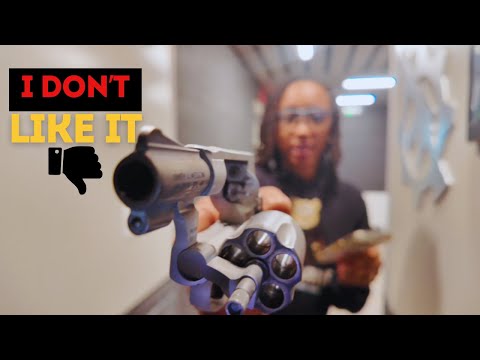
This video explains the fundamental differences between double-action (DA) and single-action (SA) firearm mechanisms, focusing on trigger pull and hammer operation. It demonstrates how revolvers and semi-automatic handguns can operate in one or both modes, highlighting the implications for trigger weight, travel distance, and safety features like decockers. The content is presented by an instructor, offering insights into selecting the right firearm based on these mechanical differences.

Quick Summary

Single action firearms require the hammer to be manually cocked before the trigger is pulled, performing only one action: releasing the hammer. Double action firearms allow the trigger to both cock and release the hammer, resulting in a longer, heavier pull. This distinction impacts trigger feel, precision, and safety.

Chapters

  1. 00:07Introduction to DA vs SA
  2. 00:16Understanding Single Action
  3. 00:23Smith & Wesson .38 Special (SA/DA Revolver)
  4. 01:21Double Action Only Revolver
  5. 01:42Sig P226 (SA/DA Semi-Automatic)
  6. 02:40Decocker Feature
  7. 03:141911 (Single Action Only)

Frequently Asked Questions

What is the main difference between single action and double action firearms?

The primary difference lies in the trigger's function. A single-action trigger performs one action: releasing a cocked hammer. A double-action trigger performs two actions: cocking the hammer and then releasing it, resulting in a longer and heavier pull.

How does a double-action-only (DAO) revolver work?

In a DAO revolver, the hammer is shrouded, meaning it cannot be manually cocked. The trigger must be pulled fully to both cock the internal hammer and then release it to fire the round.

Can semi-automatic handguns be both single and double action?

Yes, many semi-automatic handguns, like the Sig P226 shown, can operate in both modes. When the slide is cycled, the hammer is cocked for single-action fire. Pulling the trigger without cocking the hammer engages the double-action mode.

What is the advantage of a single-action trigger?

Single-action triggers are generally preferred for precision shooting because they are typically lighter (around 4-5 lbs) and have a shorter travel distance, allowing for a cleaner break and less disturbance to the aim.

Related News

All News →

More Training & Techniques Videos You Might Like

More from USCCA

View all →