How To Interpret Gel Tests

Published on January 13, 2017
Duration: 6:39

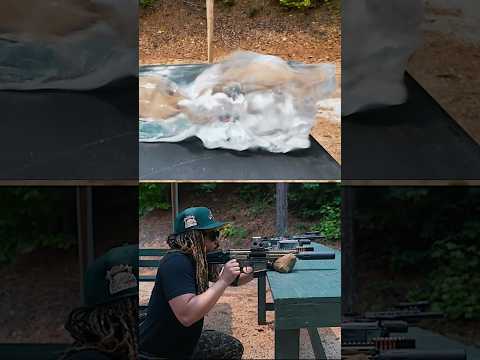
This video explains the purpose and interpretation of ballistic gel tests, emphasizing that gel appearance doesn't directly mimic tissue wounds but provides empirical data. Key metrics include penetration, expansion, fragmentation, and retained weight, which correlate with actual wound effects. The speaker, Andrew from The Chopping Block, highlights that while gel tears more easily than tissue, the size of the temporary stretch cavity is significant for rifle velocities.

Quick Summary

Ballistic gel tests provide crucial empirical data on ammunition performance, including penetration, expansion, fragmentation, and retained weight, which correlate with real-world wound effects. While the visual appearance of the gel wound differs from tissue due to elasticity, the data gathered is essential for informed cartridge selection.

Chapters

  1. 00:04Introduction to Gel Testing
  2. 00:18Test Load: 223 77gr Sierra Match King
  3. 01:06Gel vs. Tissue Wound Appearance
  4. 01:41Rifle Velocity Gel Tearing
  5. 02:15Understanding the 'Neck' in Gel Tests
  6. 03:01Key Metrics: Penetration, Expansion, Fragmentation, Retained Weight
  7. 03:34Temporary Stretch Cavity Explained
  8. 04:01Fragment Dispersion and Ultimate Penetration
  9. 04:30Gelatin Calibration and Real-World Correlation
  10. 05:04Informal vs. Professional Testing
  11. 05:40Call to Action and Further Resources

Frequently Asked Questions

What is the main purpose of ballistic gel testing?

The main purpose of ballistic gel testing is to gather empirical data on ammunition performance, specifically penetration depth, bullet expansion, fragmentation, and retained weight. These metrics correlate strongly with how a projectile will perform in actual tissue, aiding in ammunition selection.

Does the appearance of a wound in ballistic gel accurately represent a wound in human tissue?

No, the appearance of a wound in ballistic gel does not directly simulate a wound in human tissue. Gelatin is less elastic than tissue and tears more easily, especially at rifle velocities. While the tearing provides visual cues, the empirical data derived from the test is more critical.

What are the key metrics to look for in a ballistic gel test?

Key metrics in a ballistic gel test include the depth of penetration, the degree of bullet expansion, whether the bullet fragments, and its retained weight after passing through the gel. The size of the temporary stretch cavity is also important, particularly for rifle velocities.

How reliable are informal ballistic gel tests found online?

Informal ballistic gel tests, like those found on YouTube, are useful for initial insights and entertainment but should not be considered conclusive. They can help identify promising or problematic loads, but further research and professional testing data are recommended for definitive decisions.

Related News

All News →

More Training & Techniques Videos You Might Like

More from ARFCOM News

View all →