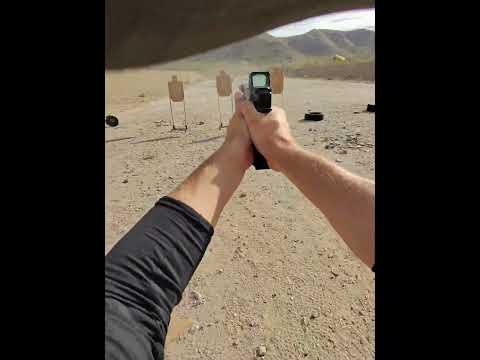
How to know if your dryfire is wrong

Published on March 27, 2024
Duration: 6:24

This guide, drawing on the expertise of Ben Stoeger, addresses the critical issue of dryfire practice not translating to improved live fire performance. It outlines common mistakes such as improper grip pressure, lack of time pressure, and ineffective target focus during dryfire. The core recommendation is to critically self-assess dryfire methods and implement a focused practice strategy, isolating one skill at a time to ensure subconscious habit formation and effective skill transfer to live shooting scenarios.

Quick Summary

If your dryfire practice isn't improving your live fire shooting, it's fundamentally incorrect. Common mistakes include loose grips, lack of time pressure, and ineffective target focus. To fix this, critically self-assess, induce time pressure, and focus on one habit at a time for 3-5 minutes repeatedly over weeks to embed skills subconsciously.

Chapters

  1. 00:00Introduction: Dryfire Problem
  2. 00:54Defining Incorrect Dryfire
  3. 01:54Core Concept of Dryfire is Flawed
  4. 02:18Typical Dryfire Mistakes
  5. 03:14Inducing Pressure in Dryfire
  6. 04:30Focused Practice Strategy
  7. 05:24Conclusion: Re-evaluate Dryfire

Frequently Asked Questions

How do I know if my dryfire practice is wrong?

The primary indicator that your dryfire practice is wrong is if it does not translate to improved performance during live fire shooting. If your skills disappear after the 'beep' in competition, your dryfire needs critical re-evaluation and adjustment.

What are common mistakes in dryfire training?

Common dryfire mistakes include holding the gun too loosely, focusing on static position over pressure, and then over-gripping in live fire. Another is focusing on the target in dryfire but panicking from dot movement during live recoil, leading to torquing the gun.

How can I make my dryfire practice more effective?

To make dryfire effective, you must induce time pressure and focus on one habit or cue at a time. Practice elements like an aggressive grip for 3-5 minutes repeatedly over weeks to embed the habit subconsciously, rather than trying to improve everything at once.

Why is time pressure important in dryfire?

Lack of time pressure in dryfire leads to issues like 'jerking the trigger' or 'shooting on index' because you practice at a comfortable pace. Incorporating stringent time demands forces you to overcome these problems, making your dryfire directly applicable to live shooting.

More Training & Techniques Videos You Might Like

More from Ben Stoeger

View all →