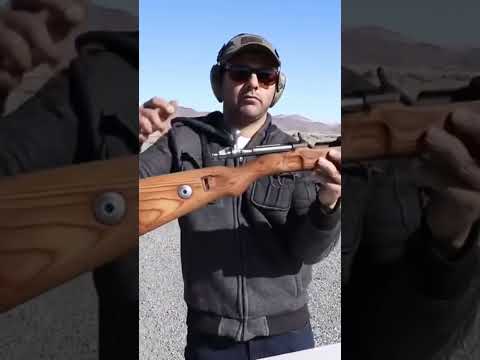
Interview with Nicole Wiley: German .22 Training Rifles

Published on November 2, 2014
Duration: 21:59

This video explores the historical significance and technical evolution of German .22 caliber training rifles, often referred to as 'trainers,' in the lead-up to World War II. Nicole Wiley, a curator and researcher, details how these firearms, designed to mimic the full-sized Karabiner 98k, were instrumental in rearming and training the German populace. The discussion highlights the transition from civilian sporting arms to standardized military-style trainers, the role of organizations like the SA, and the manufacturing processes, including the use of concentration camp labor in later war years. The content emphasizes the importance of these trainers in German society and military preparation.

Quick Summary

German .22 caliber training rifles were crucial for pre-WWII rearmament and training, serving as functional duplicates of the Karabiner 98k. Designed by Mauser and standardized by the SA, these trainers mimicked the military rifle's handling, allowing widespread proficiency. Later war production sometimes involved controversial practices like using concentration camp labor, impacting quality.

Chapters

  1. 00:19Introduction to German .22 Trainers at Simpson Limited
  2. 00:32Scale of the Collection: 1,000 Rifles
  3. 00:44Nicole Wiley: Curator of the Collection
  4. 01:01Origin of the Collection: Bob Simpson's Passion
  5. 01:21Early Discoveries: Nazi Marks on .22 Rifles
  6. 02:47Lack of Reference Books on .22 Trainers
  7. 03:04Significance of .22 Trainers in Pre-WWII Germany
  8. 03:30Target Shooting as a Social Event and Pastime
  9. 04:04Nazification of Shooting Activities
  10. 04:49Trainers as a Cover for Rearming a Nation
  11. 05:18Karabiner 98k Functional Duplicates
  12. 06:04Interchangeable Parts with 98k
  13. 06:25Business Opportunity for Arms Companies
  14. 07:07The Deutsche Sportmodell (DSM)
  15. 08:12Nicole Wiley's Personal Interest: Psychology of Nazis
  16. 08:44Concentration Camp Prisoners Assembling Rifles
  17. 09:31Walther KKW: Quality and Progression
  18. 10:23Personal Touches on Trainer Rifles
  19. 11:10Trainers Won as Trophies
  20. 11:46Mandatory Shooting Training
  21. 12:13Examining Specific Transitional Models
  22. 12:40Pre-Militarized .22 Sporters
  23. 13:11Legal Mandate for Military-Style Trainers
  24. 13:36Walther Model Fives and Simpson W625
  25. 14:10The SA's Role in Standardizing Trainers
  26. 15:00Mauser Designs the National Standard
  27. 15:35Earliest DSM Examples
  28. 16:39Redesigning the Receiver (1936)
  29. 17:22Meeting to Design the KKW (1938)
  30. 18:00The KKW: A Spitting Image of the 98k
  31. 18:47G"o"f Utilizes Concentration Camp Labor
  32. 19:23Intermittent Production by Other Manufacturers
  33. 20:09Government Support for the Arms Industry
  34. 20:18Mandatory Shooting Time with Standardized Models
  35. 20:47Conclusion and Future Book Project
  36. 21:01Seeking Correspondence and Information

Frequently Asked Questions

What was the primary purpose of German .22 caliber training rifles before World War II?

German .22 caliber training rifles served a dual purpose: they were popular civilian sporting arms for target shooting and hunting, but more critically, they were instrumental in the covert rearmament and widespread military training of the German populace in the years leading up to WWII.

How did German .22 trainers relate to the Karabiner 98k?

Many German .22 trainers were designed as functional duplicates of the Karabiner 98k. They shared similar physical dimensions, weight, and operational controls, allowing trainees to become proficient with the standard military rifle's handling and function.

Who was responsible for the design and standardization of German .22 trainers?

Mauser was initially in charge of designing these trainers. The SA (Sturmabteilung) played a significant role in demanding standardization to closely mimic the 98k, leading to models like the Deutsche Sportmodell (DSM) and later the KKW, which closely resembled the full-caliber rifle.

Did the manufacturing of German .22 trainers involve any controversial practices?

Yes, particularly later in the war, some manufacturers, such as G"o"f, utilized concentration camp labor for the assembly of these trainers. This practice led to a noticeable decline in the quality of the finished firearms.

What is the significance of the collection discussed in the video?

The video highlights a collection of approximately 1,000 German .22 training rifles at Simpson Limited, curated by Nicole Wiley. This extensive collection serves as a valuable historical archive and reference for understanding the evolution and impact of these firearms.

More Training & Techniques Videos You Might Like

More from Forgotten Weapons

View all →