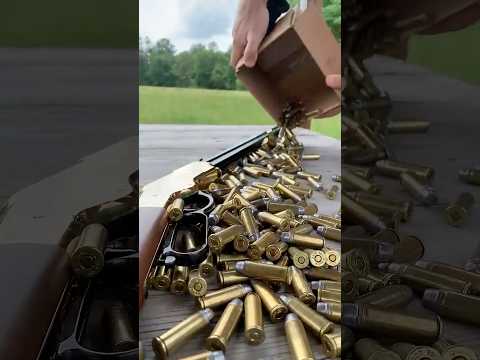
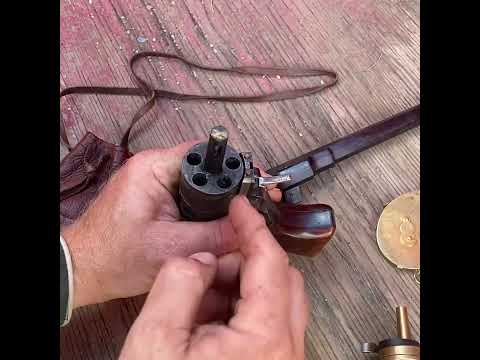
Lever Gun Series: Why not the 1860 Spencer?

Published on April 14, 2018
Duration: 30:27

This guide details a speed drill comparing the 1860 Spencer Carbine and the 1860 Henry Rifle, as demonstrated by Ian McCollum and Karl Kasarda. The drill highlights the significant difference in rate of fire due to the Spencer's manual hammer cocking versus the Henry's automatic cocking action. The Spencer took 31.04 seconds for 7 rounds, while the Henry completed it in 8.83 seconds.

Quick Summary

The 1860 Henry rifle offers a significantly higher rate of fire than the 1860 Spencer due to its automatic hammer cocking action. While the Spencer requires manual hammer cocking after each lever cycle, the Henry's action cocks the hammer automatically, allowing for much faster follow-up shots. This difference was demonstrated in a speed drill where the Henry fired 7 rounds in 8.83 seconds, compared to the Spencer's 31.04 seconds.

Chapters

  1. 00:00Introduction: 'What If' Lever Gun Project
  2. 01:10Rifle Specifications and Reproductions
  3. 02:18Ballistics Comparison: .44 Henry vs. .56-50 Spencer
  4. 04:08Spencer Speed Test (7 Rounds)
  5. 05:43Henry Speed Test (7 Rounds)
  6. 08:27Manual of Arms: 1860 Spencer
  7. 11:27Manual of Arms: 1860 Henry
  8. 14:22Blakeslee Tubes and Speed Loading
  9. 18:36Historical Context and Conclusion

Frequently Asked Questions

Why was the 1860 Spencer rifle historically favored over the 1860 Henry rifle by the military?

The Union military initially favored the Spencer due to its more rugged design, closed action less susceptible to dirt, and its more powerful .56-50 Spencer cartridge, which offered greater energy and range compared to the Henry's .44 Henry Rimfire.

What is the primary reason for the 1860 Henry rifle's faster rate of fire compared to the 1860 Spencer?

The 1860 Henry rifle features an automatic hammer cocking mechanism integrated into its lever action. In contrast, the 1860 Spencer requires the shooter to manually cock the external hammer after each cycle of the lever, significantly slowing down the firing rate.

How did the Spencer and Henry cartridges compare in terms of ballistics?

The .56-50 Spencer cartridge fired a heavier 350-grain bullet at similar velocities to the .44 Henry Rimfire's 200-grain bullet. This gave the Spencer cartridge significantly more energy, making it more effective for military purposes like stopping horses or engaging targets at longer distances.

Are modern reproductions of the 1860 Henry rifle chambered in the original .44 Henry Rimfire?

No, modern reproductions of the 1860 Henry Rifle, particularly those used in cowboy action shooting, are often chambered in more practical and safer centerfire cartridges. The original .44 Henry was a rimfire cartridge.

More Training & Techniques Videos You Might Like

More from InRangeTV

View all →