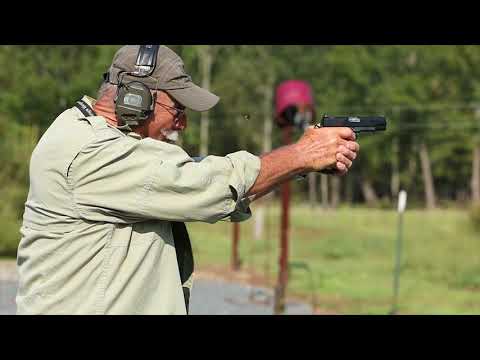
Master Class featuring Ken Hackathorn – Ep. 04: The 1 to 5 Drill

Published on August 6, 2018
Duration: 6:06

This video details the '1 to 5 Drill' by Ken Hackathorn, a 15-round pistol skill test at 10 yards using three IDPA targets. It emphasizes practical application by requiring an emergency reload, simulating real-world scenarios. The drill assesses recoil control, target acquisition, and reloading speed, with a 20-second pass/fail limit and specific scoring tiers based on IDPA zones.

Quick Summary

The '1 to 5 Drill' is a 15-round pistol skill test by Ken Hackathorn, using three IDPA targets and requiring an emergency reload. It assesses marksmanship, recoil control, and target acquisition, with a 20-second limit and IDPA scoring. Key tips include reloading in the workspace and tracking sights through recoil.

Chapters

  1. 00:00Introduction to the 1 to 5 Drill
  2. 00:43Drill Sequence and Philosophy
  3. 01:28Scoring and Grading System
  4. 03:04Post-Drill Analysis and Tips

Frequently Asked Questions

What is the '1 to 5 Drill' and its purpose?

The '1 to 5 Drill' is a 15-round pistol skill test designed by Ken Hackathorn. It focuses on marksmanship, recoil control, target acquisition, and emergency reloads under time pressure, simulating practical defensive shooting scenarios.

How is the '1 to 5 Drill' set up and executed?

It requires three IDPA silhouette targets spaced 6-7 feet apart. The shooting sequence is 1 shot on the left, 2 on center, 3 on right, 4 on center, and 5 on left, with an emergency reload when the magazine is empty.

What are the scoring and grading criteria for the '1 to 5 Drill'?

The drill has a 20-second pass/fail limit. Scoring uses IDPA zones, adding seconds for points down. Grades range from A+ (under 11s) to D (17-20s), emphasizing the first cold run for accurate skill assessment.

What are key tips for improving performance in the '1 to 5 Drill'?

Ken Hackathorn advises reloading in the 'workspace' (in front of the face), maintaining a firm grip, and actively tracking sights through recoil. Avoiding a 'snatched' trigger pull is also crucial for accuracy.

More Training & Techniques Videos You Might Like

More from Wilson Combat

View all →