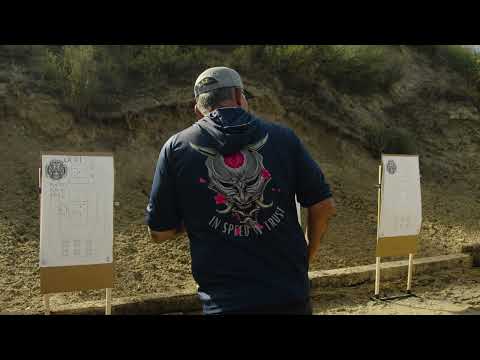
Most Shooters Fail This Drill -Will You? (The One Shot Drill)

This video details the 'One Shot Drill' designed to improve shooter confidence and accuracy by focusing on weapon control and precise trigger breaks. Instructor John G. Johnson emphasizes keeping the firearm level, maintaining a consistent grip, and using previous bullet holes as targets to build confidence that the weapon impacts where aimed. The drill is presented as a method to enhance fundamental shooting skills, particularly for defensive scenarios where the first shot is critical.

Quick Summary

The 'One Shot Drill' is a firearms training exercise designed to build shooter confidence by ensuring the weapon impacts precisely where aimed. Key elements include keeping the firearm level, maintaining a firm grip, and executing a slow, continuous trigger press. Using previous bullet holes as targets helps verify accuracy and identify common mistakes like not keeping the weapon level.

Chapters

  1. 00:02Introduction to the One Shot Drill
  2. 00:14Importance of Weapon Level and Line of Sight
  3. 00:32Common Shooter Mistakes
  4. 00:53Visualizing Weapon Level: The Pole Analogy
  5. 01:03Crisp Trigger Engagement and Grip
  6. 01:15Drill Direction: Right vs. Left-Handed Shooters
  7. 01:34Using Bullet Holes as Targets
  8. 01:56Drill Variations: Magazine Loading
  9. 02:24Recommended Starting Distance
  10. 02:30Stance and Readiness
  11. 02:53First Attempt Analysis
  12. 03:01Interpreting Drill Results
  13. 03:35The Turret Analogy for Weapon Control
  14. 04:02Second Attempt and Focus
  15. 04:16Holes as Targets for Aiming
  16. 04:30Confidence in Weapon Impact
  17. 04:51Reasons for Lack of Confidence
  18. 05:07Staying Behind the Gun and Trigger Press
  19. 05:17Third Attempt
  20. 05:40Maintaining Shot Consistency
  21. 05:44Simulating Real-World Aiming
  22. 06:02Slow Continuous Press Technique
  23. 06:11Benefits for Range Time
  24. 06:31Group Size Progression
  25. 06:49Taking Slack Out of the Trigger
  26. 07:03Firearm Choice Rationale
  27. 07:13Instructor's Marksmanship Philosophy
  28. 07:23Aiming for Center Mass in High Stress
  29. 07:41Confidence in Aiming is Key
  30. 08:00Cutting the Shot
  31. 08:10Improving Groups with Speed
  32. 08:23Magazine Capacity and Control
  33. 08:54Encouragement to Try the Drill
  34. 09:02Shooting is Not Complicated
  35. 09:07Student Confidence as a Priority
  36. 09:22Effectiveness of the One Shot Drill
  37. 09:32Interpreting Group Sizes
  38. 09:46Advanced Drill Progression: From the Holster
  39. 09:52Most Important Shot in the Magazine
  40. 10:05Instructor's Specialization and Free Ebook Offer
  41. 10:43Upcoming Free Webinar: Non-Resident Concealed Carry
  42. 11:13Next Video Preview: Proper Grip
  43. 11:24Closing Remarks and Safety

Frequently Asked Questions

What is the 'One Shot Drill' and why is it important?

The 'One Shot Drill' is a firearms training exercise focused on improving accuracy and shooter confidence. It emphasizes keeping the weapon level, maintaining a consistent grip, and executing a precise trigger press for each shot, using previous bullet holes as targets to verify impact point.

What are common mistakes made during the 'One Shot Drill'?

Common mistakes include not keeping the weapon level, often by bending at the waist or wrist, and looking below the line of sight. Rushing the shot due to excitement can also lead to deviations in accuracy and inconsistent shot placement.

How can shooters ensure their weapon stays level during the 'One Shot Drill'?

To keep the weapon level, visualize a pole running between your hips and staying on it, or imagine your upper body acting like a tank's turret that rotates without tilting. This helps maintain a consistent platform for accurate shots.

What is the recommended starting distance for the 'One Shot Drill'?

The instructor recommends starting the 'One Shot Drill' at approximately three yards. This close distance allows shooters to focus on fundamental mechanics like weapon level, grip, and trigger control without the added challenge of extreme distance.

Related News

All News →

More Training & Techniques Videos You Might Like

More from Firearms Training By John G. Johnson

View all →