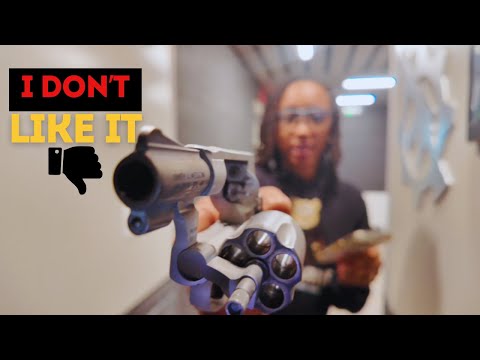
NEVER Mix These up! | Single Action vs Double Action #shorts

Published on August 2, 2025
Duration: 0:46

This short explains the fundamental differences between single-action and double-action trigger mechanisms. Single-action requires the hammer to be cocked before firing, resulting in a lighter 4.5 lb pull. Double-action requires the trigger to both cock and release the hammer, yielding a heavier 12-14 lb pull, as demonstrated on an Arex Rex Zero 1 Tactical.

Quick Summary

Single-action triggers are pre-cocked for a light pull (e.g., 4.5 lbs). Double-action requires the trigger to cock and release the hammer, resulting in a heavier pull (e.g., 12-14 lbs). This difference significantly impacts shooting feel and accuracy.

Chapters

  1. 00:00Single Action Explained
  2. 00:08Double Action Explained
  3. 00:21Trigger Pull Weight Comparison

Frequently Asked Questions

What is the main difference between single-action and double-action triggers?

In single-action, the hammer is already cocked, resulting in a light trigger pull. In double-action, the trigger pull must first cock the hammer and then release it, making the pull much heavier.

What is the typical trigger pull weight for single-action vs. double-action?

Single-action triggers are typically lighter, around 4.5 lbs as shown on the Arex Rex Zero 1 Tactical. Double-action triggers are significantly heavier, estimated at 12-14 lbs in the video.

How does the trigger mechanism affect firearm operation?

The trigger mechanism dictates how the hammer is cocked and released. Single-action offers a lighter, crisper pull for precision, while double-action provides a heavier, more deliberate pull, often used for the first shot in certain firearm types.

Related News

All News →

More Training & Techniques Videos You Might Like

More from 1st Shot Tactical

View all →