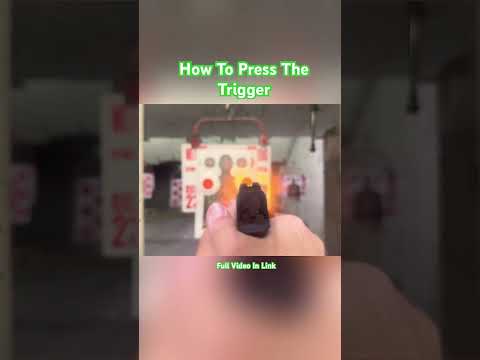
Press the Gas. Don’t Move the Car: Recoil Anticipation | Gun Training #shorts

Published on August 20, 2021
Duration: 0:59

Instructor Mike, a professional firearms instructor, provides a concise guide on overcoming recoil anticipation. He uses the analogy 'Press the gas, don't move the car' to illustrate smooth trigger control versus anticipating the shot. The instruction emphasizes that understanding and respecting a firearm's power, rather than fearing it, is crucial for developing proper shooting technique and eliminating flinching.

Quick Summary

Instructor Mike teaches that recoil anticipation causes shooters to 'throw' the gun. The key is to 'Press the gas, don't move the car,' meaning a smooth trigger press without anticipating recoil. Control through understanding and respect, not fear, is essential for proper technique and accuracy.

Chapters

  1. 00:00Recoil Anticipation Concept
  2. 00:10Car Analogy for Control
  3. 00:24Gun Power vs. Control
  4. 00:44Fear vs. Respect

Frequently Asked Questions

What is recoil anticipation in shooting?

Recoil anticipation is when a shooter moves the firearm in response to expecting recoil, often causing a flinch. Instructor Mike advises against this, emphasizing a smooth trigger press instead of anticipating the shot.

How can I stop flinching when I shoot?

To stop flinching, focus on the 'Press the gas, don't move the car' principle. This means pressing the trigger smoothly without anticipating the recoil. Building respect for the firearm's power, rather than fear, is also crucial.

What does 'Press the gas, don't move the car' mean for shooting?

This analogy means to apply steady, smooth pressure to the trigger like pressing a gas pedal, rather than jerking or moving the firearm in anticipation of the shot, which is like 'moving the car'.

Why is control important in shooting?

Control, achieved through understanding and respect for the firearm's power, eliminates the fear that leads to flinching. This allows for a proper shooting technique and better accuracy, similar to how a driver maintains control of a powerful car.

More Training & Techniques Videos You Might Like

More from Instructor Mike

View all →