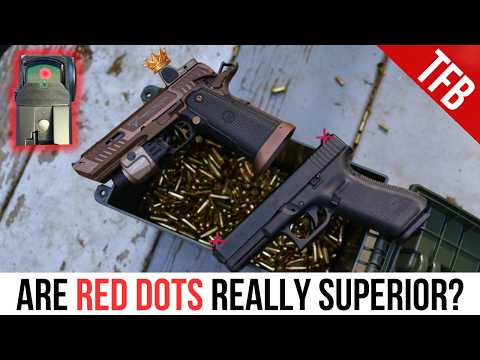
Red Dots are a SCAM?

Published on June 28, 2026
Duration: 15:09

This video explores the effectiveness of red dot sights versus traditional iron sights and shooting without any sights at close defensive ranges (0-10 yards) and at a longer distance (40 yards). The experiment involves multiple shooters of varying skill levels performing timed drills. The findings suggest that at very close distances, the sighting system may have minimal impact on speed and accuracy during a high-stress self-defense scenario, with training and familiarity being paramount. However, at longer distances, red dot sights demonstrate a clear advantage in accuracy and speed.

Quick Summary

At very close distances, such as 0-10 yards, a red dot sight typically offers no significant advantage in speed or accuracy compared to well-practiced iron sights for self-defense. The primary factor at this range is shooter proficiency and familiarity with the firearm. However, at longer distances like 40 yards, red dots provide a substantial advantage in both speed and accuracy.

Chapters

  1. 00:00Introduction: Red Dot Scam?
  2. 00:38Close Range Test Setup (0-10 Yards)
  3. 01:11Novice Shooter Results (0-10 Yards)
  4. 01:36Average Shooter Results (0-10 Yards)
  5. 02:05No Sights Results (0-10 Yards)
  6. 02:18Conclusion: Close Range Effectiveness
  7. 02:55Dickens Drill Setup (40 Yards)
  8. 03:33Red Dot Performance (40 Yards)
  9. 04:07Iron Sight Performance (40 Yards)
  10. 04:28No Sight Performance (40 Yards)
  11. 04:50Comparison: 40 Yard Performance
  12. 05:20Holster Draw Test (5 Yards)
  13. 06:00Red Dot Holster Draw Results
  14. 06:24Iron Sight Holster Draw Results
  15. 06:44No Sight Holster Draw Results
  16. 07:09Close Range Transition Test (15 Yards)
  17. 07:23Red Dot Transition Test Results
  18. 07:46Iron Sight Transition Test Results
  19. 08:00No Sight Transition Test Results
  20. 08:12Final Thoughts: Sights Matter?
  21. 08:34Historical Context of Red Dots
  22. 08:55Stock vs. Aftermarket Sights
  23. 09:00Conclusion: Red Dots Recommended

Frequently Asked Questions

Do red dot sights offer an advantage over iron sights for self-defense at close range (0-10 yards)?

At very close distances, such as 0-10 yards, a red dot sight typically offers no significant advantage in speed or accuracy compared to well-practiced iron sights for self-defense. The primary factor at this range is shooter proficiency and familiarity with the firearm.

What is the effectiveness of red dot sights at longer distances like 40 yards?

At longer distances, such as 40 yards, red dot sights provide a substantial advantage in both speed and accuracy. Drills like the Dickens drill demonstrate that red dots allow for quicker target acquisition and more consistent shot placement compared to iron sights or no sights.

Is it worth investing in a red dot sight for a self-defense pistol?

Yes, for building a self-defense pistol, it is generally recommended to include a red dot sight and a weapon-mounted light. While they may not offer a dramatic advantage at extremely close ranges, their benefits at medium to longer distances and overall ease of use make them a valuable addition.

How does shooter training impact the effectiveness of different sighting systems?

Extensive training and dry fire practice are crucial for maximizing the effectiveness of any sighting system. For close-range self-defense, shooter proficiency and muscle memory can often compensate for the perceived advantages of a red dot, making the gun's feel and consistent presentation more critical.

Related News

All News →

More Training & Techniques Videos You Might Like

More from PewView

View all →