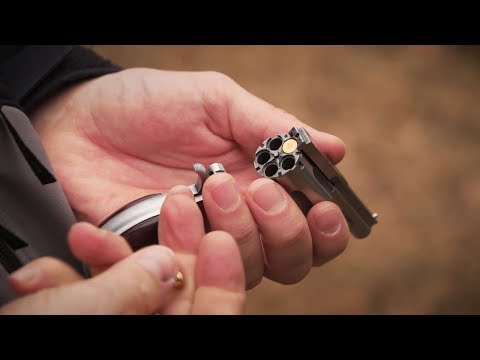
Revolvers for Self-Defense

Published on October 9, 2024
Duration: 57:51

This video emphasizes the significant impact of grip customization on the shooting experience with revolvers. Speakers highlight how changing grips can drastically improve comfort, control, and overall shootability, especially for different carry methods or shooting styles. They advocate for tailoring grips to individual needs, noting that this simple modification can transform a firearm's feel and performance, making it more accessible and effective for a wider range of users.

Quick Summary

Revolvers remain relevant for self-defense due to their inherent simplicity, exceptional reliability under stress, and ease of use, making them forgiving for new shooters. Their mechanical operation is less prone to malfunctions in compromised positions, and they are generally legal across more jurisdictions due to the absence of magazine restrictions.

Chapters

  1. 00:00Introduction: The Enduring Appeal of Revolvers
  2. 01:13Why Talk About Revolvers in 2024?
  3. 02:22Revolvers: Simplicity and Reliability
  4. 03:52Revolvers as Backup and Deep Concealment Guns
  5. 06:46Power-to-Weight Ratio and Ammunition
  6. 09:08The Finger Drives the Gun: Ammunition Independence
  7. 10:00The Legend of .357 Magnum 125 Grain Loads
  8. 12:26Evolution of Effective Revolver Ammunition
  9. 13:09Human Beings as 'Deer-Sized Animals': Penetration Needs
  10. 16:47Revolver Simplicity vs. Semi-Auto Ease of Shooting
  11. 18:55Choosing the Right Revolver for Non-Dedicated Shooters
  12. 20:17The Case for .32 Caliber Revolvers
  13. 21:20The Misery of Lightweight .357 Magnum Snubbies
  14. 22:29Recoil Management: .38 Special vs. .357 Magnum
  15. 23:58Real-World Scenarios: When Revolvers Shine
  16. 26:02Customizing Revolver Grips for Better Experience
  17. 34:02Why American Fighting Revolvers?
  18. 35:30Use Cases: Manual Transmission Analogy & Travel Legality
  19. 40:38Revolver Reliability in Real-World Defensive Shootings
  20. 42:46Revolvers vs. Semi-Autos in Compromised Positions
  21. 44:19Mindset Shift: Six Shots to Get It Done
  22. 45:48Conclusion: Revolvers as a Tool in the Toolbox
  23. 46:13Where to Start with Revolvers: Recommendations
  24. 48:55Mastering Revolver Sights and Red Dots
  25. 51:04About American Fighting Revolver
  26. 53:22The History and Soul of Fighting Revolvers
  27. 55:04Passion for Revolvers: A Niche in the Gun World
  28. 57:23Closing Thoughts and Future Content

Frequently Asked Questions

Why are revolvers still relevant for self-defense today?

Revolvers remain relevant due to their inherent simplicity, exceptional reliability under stress, and ease of use, making them forgiving for new shooters. Their mechanical operation is less prone to malfunctions in compromised positions, and they are generally legal across more jurisdictions due to the absence of magazine restrictions.

What are the advantages of revolvers for concealed carry?

Revolvers offer advantages for concealed carry, particularly in deep concealment roles like ankle or pocket carry, because their reliability is not compromised by smaller sizes, unlike some semi-automatic pistols. They are also less likely to be affected by ammunition or magazine capacity restrictions common in some areas.

How can grip customization improve revolver shooting?

Customizing revolver grips can significantly enhance the shooting experience by improving comfort, control, and recoil management. This allows shooters to better handle powerful calibers and adapt the firearm to different carry methods or shooting styles, making them more effective and enjoyable to shoot.

What is a good starting point for someone interested in revolvers?

For those new to revolvers, a medium-frame, steel-constructed model with a manageable trigger and good sights is recommended. Brands like Taurus offer accessible options, such as the Taurus 856 Ultralight, providing good quality at a lower price point for exploration.

Are revolvers reliable in real-world defensive encounters?

Yes, revolvers have a proven track record of reliability in real-world defensive shootings. Their simple design means fewer potential points of failure, and they can often function even when semi-automatics might fail due to being out of battery or jammed by body contact during a struggle.

Related News

All News →

More Training & Techniques Videos You Might Like

More from Gun Talk Media

View all →