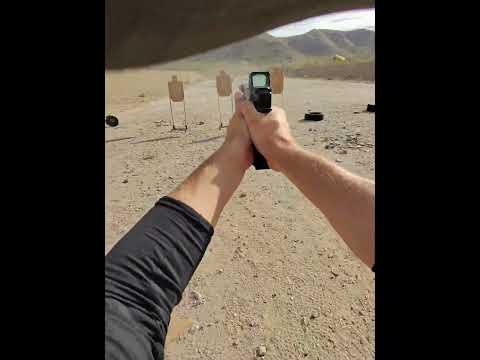
Riding the snap with the PDP SF

Published on November 24, 2025
Duration: 3:43

This guide details Ben Stoeger's 'Doubles' drill, a method for improving split times and shot accuracy. Stoeger, an expert competition shooter, emphasizes refining technique at distance (20 yards) before focusing on speed at closer ranges. He highlights how improper input during rapid fire can lead to shots drifting left or low, and discusses managing the 'snappy' recoil of the steel-frame Walther PDP SF, even suggesting aftermarket grips for better control.

Quick Summary

The 'Doubles' drill, demonstrated by Ben Stoeger, involves firing fast pairs of shots to improve split times. Training this technique at 20 yards refines fundamental skills, making speed acquisition more natural. Managing the 'snappy' recoil of the Walther PDP SF, potentially with aftermarket grips, is key to consistent performance.

Chapters

  1. 00:00Intro: Rapid Fire Demo PDP SF
  2. 00:19PDP SF Steel Frame & Grip Analysis
  3. 00:52The 'Doubles' Drill Explained
  4. 01:50Benefits of Distance Training
  5. 02:13Close Range Speed & Trigger Freeze

Frequently Asked Questions

What is the 'Doubles' drill for improving shooting speed?

The 'Doubles' drill involves drawing your firearm and firing two rapid shots, allowing the gun to settle, then repeating the process. Analyzing shot placement helps diagnose input errors and refine technique for faster, more accurate shooting.

How can recoil be managed on a steel-frame Walther PDP SF?

The steel-frame Walther PDP SF has a 'snappy' recoil. Improving support hand contact with the grip is crucial. Using aftermarket grips like LOK Grips can enhance this connection, aiding in recoil management and faster follow-up shots.

Why is training at distance important for shooting speed?

Training at distance, like 20 yards, helps solidify fundamental shooting technique. Once your technique is precise at longer ranges, the speed required for closer targets becomes more naturally achievable.

What is 'trigger freeze' in shooting?

'Trigger freeze' occurs when your trigger finger cannot keep up with the speed potential of the firearm, especially during rapid fire. It signifies a need for more practice to synchronize finger movement with the gun's cycling.

Related News

All News →

More Training & Techniques Videos You Might Like

More from Ben Stoeger

View all →