This video from Tenicor features an expert instructor who categorizes firearms instructors into two types: those who want to 'be somebody' (self-centered) and those who want to 'do something' (mission-driven and student-focused). The instructor emphasizes that a resume is less important than an instructor's ability to genuinely improve students' skills and their confidence in openly sharing their methodologies. He highlights his own unique contributions, such as the 'timing rule for in-fight weapons access' and training solutions for contact-distance engagements using Simunitions, addressing historical gaps in training.
This expert guide from Tenicor details a critical AR-15 grip mistake that hinders recoil control. It emphasizes the 'grip and hang' technique, popularized by Frank Proctor, focusing on proper support hand pressure on the rail and a relaxed elbow to achieve efficient, linear pressure. This method is key for maintaining stability and reducing fatigue during shooting.
This expert guide from Tenicor focuses on optimizing concealed carry by addressing clothing and belt selection. The speaker, demonstrating expert authority, explains how the thickness of pants material and the sturdiness of a belt are crucial for preventing printing. A well-chosen belt supports firearm weight and enables holster features without sacrificing comfort.
This video discusses the evolving reliability of firearms, contrasting modern first-generation products with those from the 1990s. The speaker, drawing on personal experience, suggests a recent trend of distrust in new firearm releases, unlike the confidence placed in early Glocks and SIG P226 models. The advice is to exercise caution with brand-new firearm models until their reliability is proven through observation or established use.
This video explains how to mitigate firearm 'printing' (visibility through clothing) by using specific holster features. Expert instructor, [Speaker Name], demonstrates how 'wings,' 'claws,' or 'camming bars' on holsters leverage the belt to tuck the grip closer to the body, improving concealment. The guide highlights that even smaller firearms like the Glock 26 can benefit from these techniques, especially when compared to larger models like the Glock 34 with a magwell.
This video explains and demonstrates predictive shooting, a technique focused on anticipating the firearm's behavior for rapid, accurate fire. The instructor, demonstrating expert-level proficiency, emphasizes consistent actions to predict outcomes, rather than confirming each shot. This method is crucial for achieving high-speed shooting paces, such as the 1.97 seconds shown for multiple shots, without hesitation.
This video emphasizes that owning a gun is insufficient; responsible and professional training is paramount. Expert instruction covers drawing techniques, dynamic movement drills, and the intellectual, physical, and emotional challenges of firearm proficiency. The content highlights the importance of a professional approach across diverse firearm applications like hunting, target shooting, and self-defense.
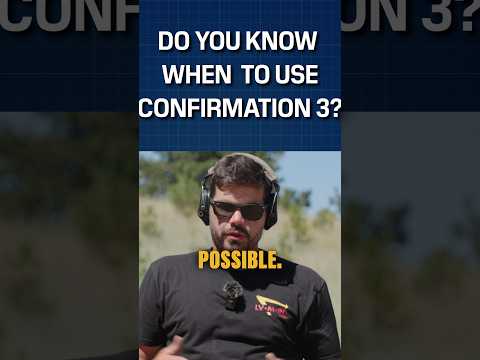
This guide, drawing from expert instruction, details a performance shooting technique focused on speed over absolute precision. It explains the concept of 'Confirmation 3' aiming and why it's often detrimental in dynamic scenarios. The core principle is that for targets beyond 7-10 yards, a 'good enough' sight picture achieved quickly is superior to a perfect sight picture that takes too long. This approach emphasizes reactive shooting for faster target engagement.
This video features Craig Douglas discussing the complexities of gun ownership in America. He emphasizes that while the Second Amendment guarantees the right to bear arms, it is intrinsically linked to a profound responsibility. Douglas highlights that owning a gun does not equate to proficiency in its use, especially under pressure, and that proper training is crucial for safe and effective handling. He also touches upon the idea that not everyone is suited for gun ownership due to impulse control or behavioral issues, and that while government mandates for training might be complex, responsible ownership is paramount.
This expert-level guide from Tenicor details a dry fire progression for drawing from concealment, emphasizing the use of par times to build hand speed and a consistent master grip. The technique breaks the draw into two parts, focusing on efficient garment clearing and firearm acquisition, followed by a smooth presentation to the target with a focus on sight acquisition. This method is designed to improve overall draw efficiency under pressure.
This guide, drawing from an experienced instructor, emphasizes the critical importance of reliability and repeatability in a firearm draw over pure speed. It advises focusing on a consistent, robust draw stroke that can be executed under pressure in dynamic scenarios, rather than solely optimizing for timer results. The instruction highlights the value of consistent practice for building dependable skills.
This instructional video from Tenicor, presented by an experienced instructor, addresses the common issue of a snagged firearm draw. It provides practical techniques for clearing snags caused by cover garments, especially when using optic-equipped pistols. The emphasis is on a direct, corrective action rather than a diagnostic pause, ensuring a faster and more reliable draw under pressure.
Gun Laws by State
Read firearms regulations for all 50 states + D.C.
Find Gun Dealers
Search licensed FFL dealers near you.