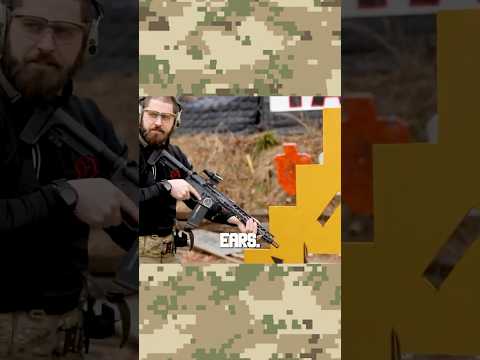
Single man CQB theory

Published on February 26, 2021
Duration: 3:13

This video demonstrates a fundamental single-man Close Quarters Battle (CQB) technique focused on 'pie-ing' corners and doorways. The instructor emphasizes working 'low to high' for threat engagement and utilizing proper body spacing, particularly the elbow, to manage angles effectively when entering a room. The technique covers systematic clearing of 90, 150, and 180-degree angles.

Quick Summary

In single-man CQB, 'pie-ing' a corner involves slowly exposing yourself to the area in small increments to systematically scan angles, while working 'low to high' ensures you address ground-level threats first. Proper body positioning, like using your elbow for reference, helps manage your signature and effectively clear 90, 150, and 180-degree angles.

Chapters

  1. 00:00Introduction & Safety
  2. 00:06Understanding Signature
  3. 00:13Rounding a Corner
  4. 00:34Pies the Corner Technique
  5. 00:46Single Man CQB: Low to High
  6. 01:14Utilizing the Left Elbow
  7. 01:45CQB Angles Explained (90-180)
  8. 02:14Demonstrating Angles
  9. 02:28Prioritizing Low to High
  10. 02:51Slicing the Pie Further
  11. 02:54Dynamic Entry & 180 Angle
  12. 03:06Conclusion & Practice

Frequently Asked Questions

What is the 'pie-ing' technique in Close Quarters Battle (CQB)?

The 'pie-ing' technique in CQB involves slowly exposing yourself to a new area, like a doorway or corner, in small increments. This allows you to systematically scan different angles and identify threats without fully exposing yourself at once, minimizing your signature.

Why is working 'low to high' important in single-man CQB?

Working 'low to high' is a critical CQB principle for threat engagement. It means you first scan and prepare to engage any threats at ground level, then move your weapon to address threats at higher or further angles. This ensures you don't miss low threats while clearing higher areas.

How does body positioning, like using an elbow, aid in CQB entry?

Proper body positioning, such as extending an elbow when approaching a narrow angle, helps manage your 'signature' and maintain control. It provides a reference point for your weapon's position and allows for more precise 'slicing of the pie' as you clear the area.

What are the primary angles to consider when clearing a room in CQB?

The primary angles to consider when clearing a room in CQB are typically the 90-degree angle (immediate threat area), the 150-degree angle (further into the room), and the 180-degree angle (the deepest part of the room). Each requires a specific scanning and engagement strategy.

More Training & Techniques Videos You Might Like

More from Richardson Precision & Training

View all →