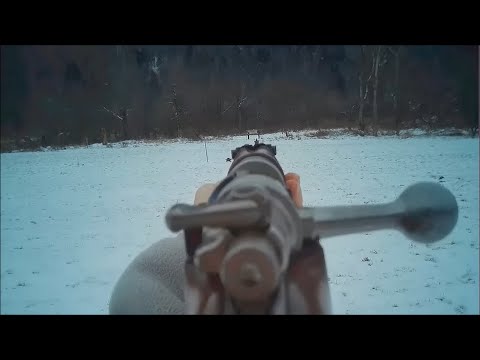
Slow-motion firearm Demonstration: Browning Automatic Rifle, 1918 Model

Published on January 13, 2016
Duration: 2:05

This expert-level demonstration from the Royal Armouries showcases the operational mechanics of the Browning Automatic Rifle, Model of 1918. Utilizing high-speed slow-motion footage, the video details the loading process, firing sequence, spent casing ejection, and bolt cycling. It also includes a visual of bullet impact on ballistic gel, offering insights into terminal ballistics.

Quick Summary

The Browning Automatic Rifle (BAR) Model 1918 is demonstrated in slow motion, showcasing its loading, firing, bolt cycling, and muzzle flash. The Royal Armouries presentation also includes ballistic gel testing for terminal ballistics analysis.

Chapters

  1. 00:04Loading Magazine and Charging Rifle
  2. 00:16Firing Rifle in Slow Motion
  3. 00:33Ejection Port Slow Motion Detail
  4. 01:06Bolt Cycling and Bullet Chambering
  5. 01:23Muzzle Flash and Recoil Sequence
  6. 01:30Bullet Impact on Ballistic Gel
  7. 01:47Charging Rifle and Dry Firing

Frequently Asked Questions

What is demonstrated in the slow-motion footage of the Browning Automatic Rifle Model 1918?

The slow-motion footage demonstrates the rifle's loading process, firing sequence, detailed bolt cycling through the ejection port, muzzle flash, recoil, and spent casing ejection. It also shows a bullet's impact on ballistic gel.

What safety precautions are evident during the Browning BAR demonstration?

The operator is shown wearing ear protection and safety glasses. The rifle is rested on sandbags, indicating a stable and controlled firing setup, crucial for safe firearm handling.

What historical context is provided for the Browning Automatic Rifle?

The video identifies the firearm as the Browning Automatic Rifle, Model of 1918, and notes its origin in Belgium. This places the demonstration within a historical firearms context.

Related News

All News →

More Training & Techniques Videos You Might Like

More from Royal Armouries

View all →