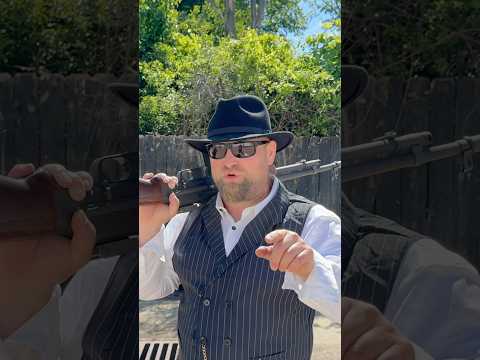
This content highlights a historical observation regarding World War II Marines utilizing World War I-era Browning Automatic Rifles (BARs). The discussion points out that the original wing sights on the WWI BAR were often preferred over those found on the A2 variant, which was also in service during WWII. This indicates a practical reason for the continued use of older, but in some aspects superior, equipment.
This video provides a historical overview of the M60 machine gun, detailing its development, operational history, and technical specifications. It highlights the M60's role in various conflicts, its design influences, and its eventual replacement. The content also promotes an opportunity to experience shooting the M60 and other full-auto firearms at Dragon Man's.
This video provides an in-depth look at the Colt Monitor (R80), a rare variant of the Browning Automatic Rifle developed for law enforcement in 1931. It details the specific modifications made for police use, including a shortened barrel, added pistol grip, and Cutt's Compensator, and discusses its limited adoption due to high cost. The expert analysis highlights the firearm's historical significance and technical features.
This video from Classic Firearms discusses the top five firearms featured in the iconic World War II movie 'Saving Private Ryan'. The hosts, Kyle and Matt, provide their opinions on the historical significance and cinematic impact of each weapon, including the BAR M1918 A2, M1 Garand, Thompson Submachine Gun, M1911A1 pistol, and the Springfield 1903 A4 sniper rifle. They also touch upon honorable mentions like the M1 Carbine, offering insights into their design, historical use, and on-screen presence.
This guide details the technique for firing and clearing the M1918A2 Browning Automatic Rifle (BAR) as demonstrated by an expert. The demonstration emphasizes proficient handling of this heavy automatic weapon in a simulated Pacific Theater environment, including proper clearing procedures after a full-auto burst. The instruction highlights the use of period-accurate gear, showcasing high authority and expertise.
This guide details the operation and adjustment of the bipod and rear monopod on the M1922 BAR, a rare variant of the Browning Automatic Rifle. It covers deploying, attaching, and adjusting these stabilizing components, emphasizing their role in improving accuracy during sustained fire. The information is presented with high authority by Ian McCollum of Forgotten Weapons.
This video explores viewers' favorite real firearms featured in movies and television shows. The host, TheYankeeMarshal, shares his personal favorite, Chloe's Winchester 1892 Mares Leg from Firefly, inspired by Steve McQueen's use of similar firearms. The discussion highlights a variety of iconic guns, from classic revolvers and pistols to modern firearms, and touches on their impact on viewers' interest in firearms.
This YouTube video showcases the Browning Automatic Rifle (BAR), describing it as a 'true classic gangster gun.' The content focuses on presenting this historical firearm, highlighting its iconic status. While detailed technical specifications or operational demonstrations are not mentioned, the video's intent is to introduce viewers to the BAR's legacy and visual appeal.
This video explores the history and experiences of the 93rd Infantry Division, an African American unit that served in both World War I and World War II. It highlights their unique service under French command in WWI, their training and deployment in WWII, and the challenges of racism and discrimination they faced. The narrative emphasizes their combat roles, significant achievements like capturing a Japanese Colonel alive, and the personal stories of soldiers like Sergeant Daniel Thornton Jr., underscoring the human element of their service.
This video demonstrates the terminal ballistics of firearms used by Bonnie and Clyde, and modern equivalents, using ballistic gel torsos. It highlights the destructive power of historical firearms like the BAR in .30-06 and the Thompson submachine gun, comparing their effects to modern ballistic testing. The reenactment aims to visualize the impact of high-volume gunfire on human targets.
This video provides an expert-level overview of the Colt Automatic Machine Rifle Model 1919, the first commercial variant of the BAR. Ian McCollum details its historical context, post-WWI commercialization efforts by Colt, and key technical distinctions from the military M1918 BAR, including its buttstock-mounted recoil spring and muzzle nut. The discussion highlights its production numbers, export sales, and various caliber offerings.
This expert guide from 704 Tactical provides insights into shooting the iconic Browning 1918 BAR. The instructor, demonstrating high authority, covers historical context and practical shooting techniques for this semi-automatic rifle chambered in .30-06 Springfield. Viewers learn about proper stance, grip, and trigger control for effective use of this historical firearm.
Gun Laws by State
Read firearms regulations for all 50 states + D.C.
Find Gun Dealers
Search licensed FFL dealers near you.