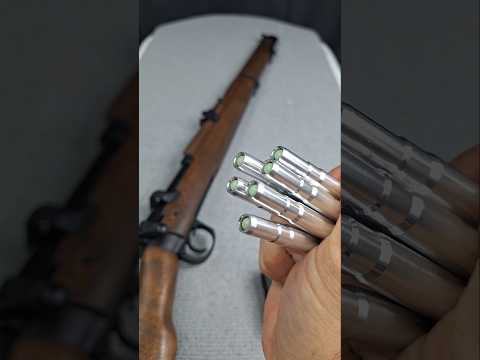
This video details the Austro-Hungarian Army's modification of captured Russian Mosin Nagant rifles during WWI. These rifles were rechambered for the 8x50mm Rimmed cartridge, primarily for rear-echelon troops. The process involved cutting new chambers and recalibrating sights, often without re-barreling, leading to squeeze-boring of bullets. Several companies, including OEWG and the main Austrian artillery workshop (AF), performed these conversions.
This guide details the installation of a 32-round snail drum magazine onto a WWI-era Artillery Luger, transforming it into a carbine. The video, presented by Legacy Collectibles, showcases original WWI armorer's chest contents, including the Luger, its stock, and Bing Nürnberg snail drums. Expert insights cover historical context and identification of original accessories.
This content highlights a historical observation regarding World War II Marines utilizing World War I-era Browning Automatic Rifles (BARs). The discussion points out that the original wing sights on the WWI BAR were often preferred over those found on the A2 variant, which was also in service during WWII. This indicates a practical reason for the continued use of older, but in some aspects superior, equipment.
This guide details the operation and key features of the Stevens Model 520-30 shotgun, a controversial WWI-era firearm known for its slam-fire capability and unique 'humpback' design. The information is presented with high authority, drawing on deep subject matter expertise in historical firearms and WWI/WWII small arms history. It covers the shotgun's historical context, mechanical design, and operational aspects.
This video explores the Mauser 1918 T-Gewehr, an early German anti-tank rifle developed during WWI. It highlights the rifle's design as an evolution of the Mauser 98, its 13.2mm caliber, and its role in countering early tanks. The rifle is presented as a precursor to later .50 caliber anti-tank weapons and is currently displayed at the NRA National Firearms Museum.
This expert review from C&Rsenal delves into the Ruby Pistol Model 1915, a Spanish-made emergency firearm mass-produced during WWI. The analysis covers its physical dimensions, loading capacity, ergonomics, and historical manufacturing context, highlighting variations due to its widespread production. The video features live fire demonstrations and detailed mechanical insights.
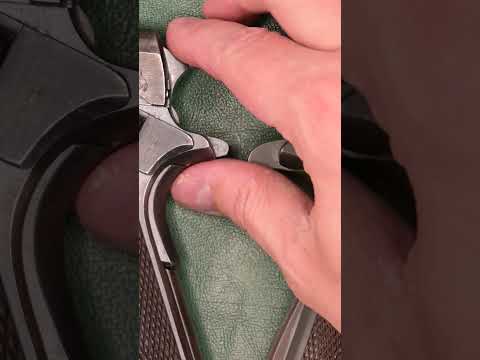
This guide details the key evolutionary differences between the original M1911 and the M1911A1 pistol, as presented by C&Rsenal. It covers ergonomic improvements like trigger reach, frame relief cuts, mainspring housing design, and grip safety modifications to prevent hammer bite. The guide also touches upon sight picture enhancements and WWII-era production changes, offering insights for firearm enthusiasts and historians.
The Springfield 1903 Air Service Rifle was a unique WWI adaptation, developed as a backup for aviators due to the lack of suitable semi-automatic rifles in .30-06. It featured a distinctive 25-round magazine, a cut-down stock and handguard, and a modified buckhorn-style rear sight for rapid aerial engagement. While bolt-action, its design aimed to provide a higher volume of fire than standard infantry rifles in a specific combat role.
This video explores the Pedersen Device, a WWI-era firearm modification designed to convert the 1903 Springfield rifle into a semi-automatic, pistol-caliber weapon for trench warfare. Developed by John D. Pedersen, the device aimed to provide soldiers with increased firepower for advancing across no-man's-land. However, the war's end prevented its widespread adoption, and most units were destroyed. A surviving example is showcased at the National Firearms Museum.
This YouTube video explores the fascinating topic of 'Fake Trees From WW1'. While the title is intriguing and suggests a historical or tactical application, it's important to note that no specific firearms, calibers, manufacturers, or related topics are mentioned in the provided title and description. The content appears to be focused on a specific historical artifact or concept, rather than direct firearms discussion.
This video explains the origin of facial scars on historical German officers, detailing the tradition of Mensur fencing. It highlights that these 'Schmiss' scars were a symbol of courage and character from elite university duels, not battlefield injuries. The practice contributed to the iconic image of the 'scarface' German officer in WWI and WWII.
This video features a review and test of the SMLE Mk. III airsoft rifle, a replica of the iconic Lee-Enfield. The creator will discuss the feel and performance of the airsoft replica, evaluating if it lives up to its legendary status. A disclaimer clarifies that the item is an airsoft replica and not a real firearm, emphasizing safety rules and legal compliance.
Gun Laws by State
Read firearms regulations for all 50 states + D.C.
Find Gun Dealers
Search licensed FFL dealers near you.