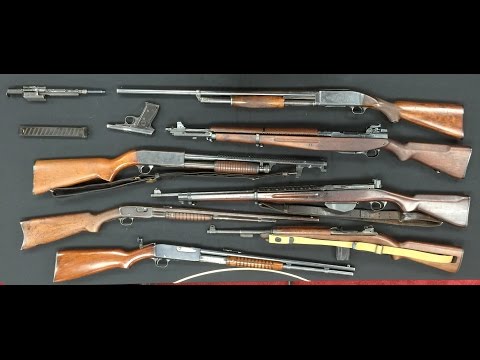
This video explores the Pedersen Device, a WWI-era firearm modification designed to convert the 1903 Springfield rifle into a semi-automatic, pistol-caliber weapon for trench warfare. Developed by John D. Pedersen, the device aimed to provide soldiers with increased firepower for advancing across no-man's-land. However, the war's end prevented its widespread adoption, and most units were destroyed. A surviving example is showcased at the National Firearms Museum.
This guide details the installation and basic operation of the Pedersen Device, a historical firearm conversion intended for the M1903 Springfield rifle. The process involves removing the original bolt and inserting the device, which enables semi-automatic fire with a specialized 40-round magazine. Instruction is provided by an expert with high authority, offering detailed mechanical explanations and historical context.
This video explores the Pedersen Device, a fascinating piece of firearm history. It delves into its historical context and demonstrates its functionality through firing. The description links to a longer video for more in-depth information and live firing footage.
This video provides an expert-level overview of U.S. small arms from World War I, featuring detailed demonstrations and historical context. The presenter, exhibiting high authority and expertise, showcases iconic firearms like the Springfield 1903, BAR M1918, and Colt 1911, alongside rarer variants and accessories such as the Pedersen Device. The content includes high-quality slow-motion analysis and accurate historical details.
This Q&A session from C&Rsenal covers a wide range of firearms topics, from the surprising complexity of repeating shotguns and the Pedersen device to the nuances of Mauser actions and the historical significance of various revolvers. The hosts discuss the engineering challenges behind firearms like the Winchester 97, the evolution of pistol actions, and the aesthetic appeal of different rifle designs. They also touch upon the practicalities of concealed carry, the challenges of historical firearms research, and the enduring legacy of certain firearm designs.
This guide details the installation and basic operation of the extremely rare Pedersen Device, a WWI-era conversion for the M1903 Mark 1 Springfield rifle. Experts from Brownells explain how the device transforms the bolt-action rifle into a semi-automatic, blowback-operated firearm chambered in the proprietary .30 Pedersen cartridge, emphasizing the significant modifications required for the rifle and the device's unique 40-round magazine system. The rarity of surviving units is also highlighted.
This video reviews the new Federal 30 Super Carry cartridge, drawing a historical parallel to the WWI Pedersen Device cartridge. The presenter highlights its .312 diameter bullet, similar to .32 ACP, but in a longer case operating at significantly higher pressures (45,000 psi), exceeding that of 9mm and even .357 Magnum. While acknowledging dimensional similarities to the 7.65 Longue, the reviewer clarifies they are not the same cartridge. The video aims to assess this innovative design and its potential to gain traction in the market.
This guide details the installation of the Pedersen Device, a WWI-era conversion that transforms the bolt-action U.S. Rifle Model 1903 into a semi-automatic firearm. The process involves removing the standard bolt and inserting the device, followed by locking in its distinctive 40-round magazine. The device fires a unique .30 Pedersen cartridge, distinct from the rifle's standard .30-06.
This guide details the expert gunsmithing process for repairing a malfunctioning Pedersen Device, a WWI-era conversion kit for the M1903 rifle. It covers diagnosing mechanical failures due to incorrect parts, precision machining of replacement components like the collar, and validating the repair through live fire testing. The instruction emphasizes meticulous attention to detail and historical accuracy, as demonstrated by recognized expert Mark Novak.
This guide details the process of converting a Springfield M1903 bolt-action rifle into a semi-automatic firearm using the Pedersen Device. The conversion involves removing the standard bolt and inserting the Pedersen Device, followed by loading a high-capacity magazine. The video highlights the historical context of this World War I-era innovation, designed to enhance infantry firepower in trench warfare.
The Pedersen Device, officially the Model 1918 .30 caliber automatic pistol, was a secret WWI weapon designed to convert the Springfield 1903 rifle into a semi-automatic firearm. It utilized a 40-round magazine and fired a unique 80-grain projectile at 1300 fps, intended for the 1919 Spring Offensive. Specialized web gear was issued for carrying the device and its magazines, with conversion involving replacing the rifle's bolt.
This video delves into the innovative designs of John Pedersen, a highly regarded but often overlooked American firearms designer. It covers his work with Remington, including iconic models like the Model 12, Model 14, and the unique Model 51 pistol, as well as his experimental military projects like the Pedersen Device and Pedersen Rifle. The expert analysis highlights Pedersen's mechanical ingenuity and his impact on firearms development, particularly his contributions to pump-action shotguns and delayed blowback mechanisms.
Gun Laws by State
Read firearms regulations for all 50 states + D.C.
Find Gun Dealers
Search licensed FFL dealers near you.