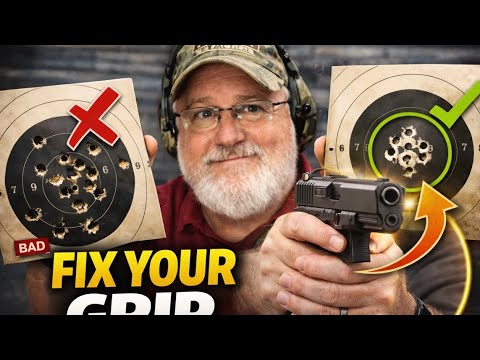
The 2 Best Ways to Grip a Pistol Compared

Published on September 9, 2021
Duration: 19:19

This video compares two distinct pistol grip philosophies: Active and Passive recoil management. John Lovell demonstrates his 'Active' grip, emphasizing specific pressure points and a cammed-forward support thumb. Paul Perkerson explains the 'Passive' grip, focusing on neutral wrist and equilateral arm extension for natural recoil absorption. Both methods share universal fundamentals like getting high on the backstrap and consistent front-to-rear pressure from the firing hand.

Quick Summary

The video compares 'Active' and 'Passive' pistol grip philosophies. Active grips use aggressive torque and pressure points, while Passive grips rely on body mechanics and arm extension. Universal fundamentals include getting high on the backstrap and consistent front-to-rear pressure.

Chapters

  1. 00:00Introduction & Knife Ad
  2. 01:15Grip Philosophy Overview
  3. 02:00Active vs. Passive Recoil Management Defined
  4. 06:35Universal Grip Fundamentals
  5. 08:41Detailed Grip Technique Comparison
  6. 10:31Conclusion: Results-Based Training

Frequently Asked Questions

What are the two main pistol grip philosophies discussed?

The video compares 'Active' and 'Passive' recoil management grips. Active involves aggressive torque and specific pressure points, while Passive relies on body mechanics and arm extension to absorb recoil naturally.

What are the universal fundamentals for any pistol grip?

Key fundamentals include getting your hand as high as possible on the backstrap for maximum leverage and applying consistent front-to-rear pressure with your firing hand.

What is the difference between Active and Passive pistol grips?

The Active grip uses deliberate torque and pressure points, like a cammed-forward support thumb. The Passive grip uses neutral wrist alignment and equilateral arm extension to absorb recoil like a shock absorber.

How should shooters evaluate their pistol grip technique?

Shooters should fully master one technique and evaluate it based on performance results. Understanding the 'why' behind your chosen method is crucial for intelligent firearms training.

Related News

All News →

More Training & Techniques Videos You Might Like

More from Warrior Poet Society

View all →