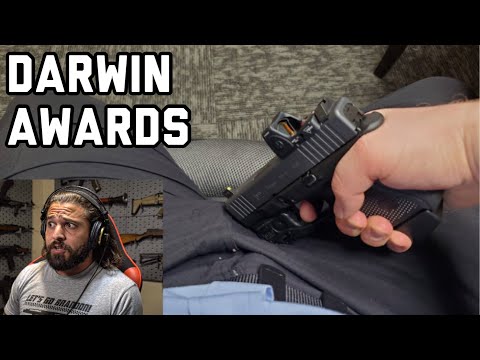
The Worst Internet Gun Fails #8 - The Darwin Awards

Published on March 21, 2022
Duration: 19:18

This guide synthesizes expert instruction from Brandon Herrera on critical firearm safety principles and common handling errors. It covers the four fundamental rules of gun safety, demonstrates safe firearm handling, and highlights the severe consequences of misuse, including negligent discharges and mishandling of explosives. The content emphasizes learning from dangerous "fails" to prevent accidents and promote responsible gun ownership.

Quick Summary

Expert firearm instructor Brandon Herrera analyzes dangerous gun fails, emphasizing the four rules of safety, negligent discharges, and explosive risks. Learn to avoid critical errors by understanding the consequences of mishandling firearms and explosives, and the importance of proper technique and awareness.

Chapters

  1. 00:00Introduction to Darwin Awards
  2. 01:06Large Caliber Revolver Fail
  3. 02:22Tannerite and Explosives Safety
  4. 07:06The Four Basic Rules of Gun Safety
  5. 08:49Unexploded Ordnance (UXO) and Landmines
  6. 11:20Negligent Discharge and Range Safety
  7. 13:54Barrel Obstructions and Pressure
  8. 15:28Cannon Safety and Muzzle Awareness

Frequently Asked Questions

What are the four basic rules of gun safety?

The four basic rules of gun safety are: 1. Treat every firearm as if it is loaded. 2. Keep your finger off the trigger until your sights are on the target and you have decided to fire. 3. Know your target and what is beyond it. 4. Never point a firearm at anything you are not willing to destroy.

What are the dangers of using Tannerite at close distances?

Using Tannerite at close distances is extremely dangerous due to the significant shockwaves and pressure generated. Large quantities, like 50 lbs, require substantial safety zones to prevent injury from the blast and fragmentation.

What causes a firearm barrel to obstruct or fail?

Barrel obstructions, such as water or debris, can cause dangerous overpressure when a firearm is discharged. This is particularly critical when firing underwater, where partial submersion can lead to barrel deformation or catastrophic failure.

What is a negligent discharge and how can it be prevented?

A negligent discharge is an unintentional firing of a firearm due to improper handling. Prevention involves strict adherence to muzzle awareness, trigger discipline, and ensuring the firearm is unloaded when not in active use.

Related News

All News →

More Training & Techniques Videos You Might Like

More from Brandon Herrera

View all →